
Chiles en Nogada – An Independence Day Tradition in Mexico
For a few weeks each year, this dish turns up on menus across Mexico wrapped in the exact colors of the flag — and disappears again almost as quickly as it arrived.
Quick facts
- Origin: Puebla, Mexico, 1821 (Convent of Santa Mónica)
- Season: July through September, tied to Mexican Independence Day on September 16
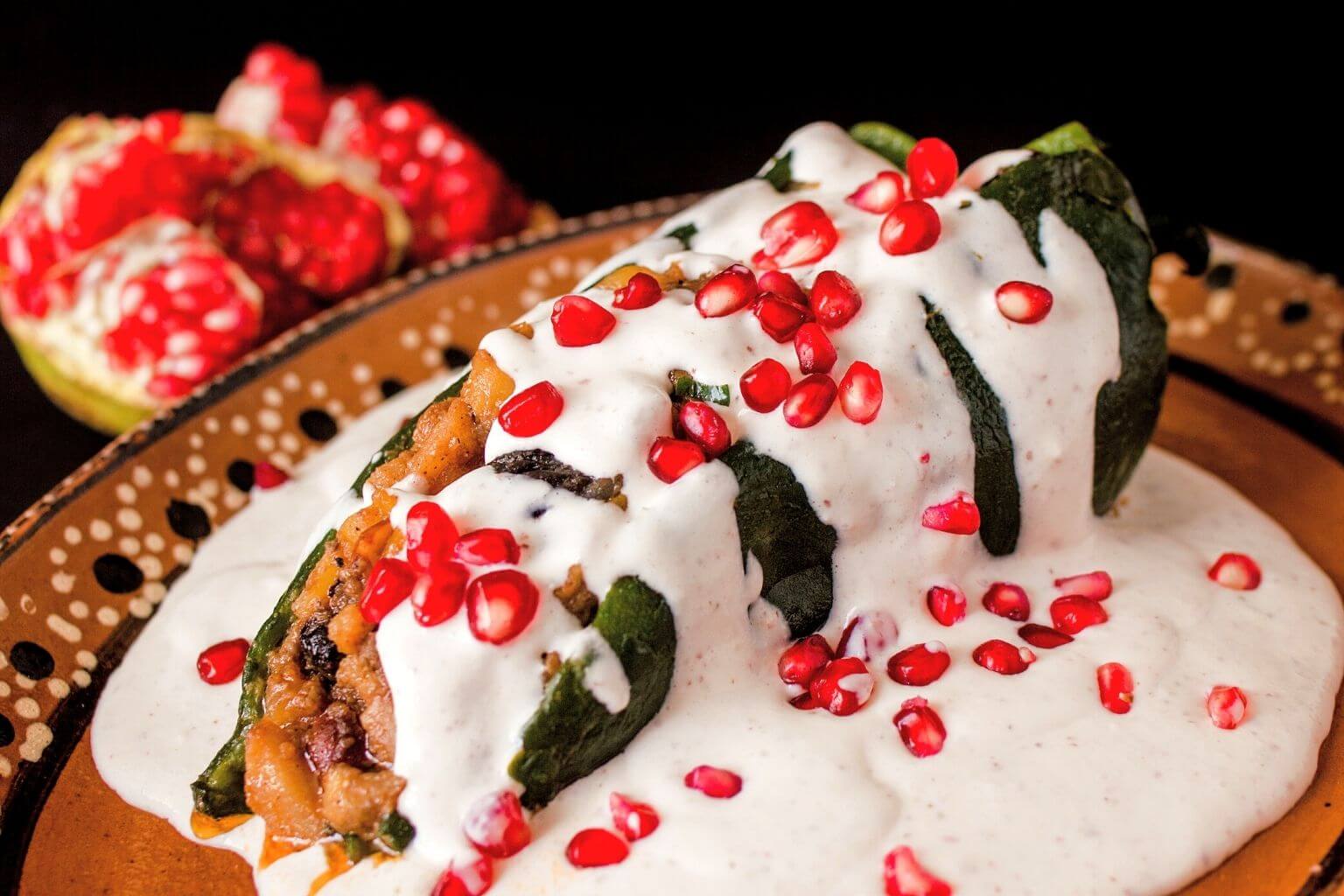
- Colors: Green (poblano chile), white (nogada sauce), red (pomegranate seeds) — the colors of the Mexican flag
- Main components: Poblano chile, picadillo filling (beef and pork with fruit and spices), walnut cream sauce, pomegranate seeds
What is Chiles en Nogada?
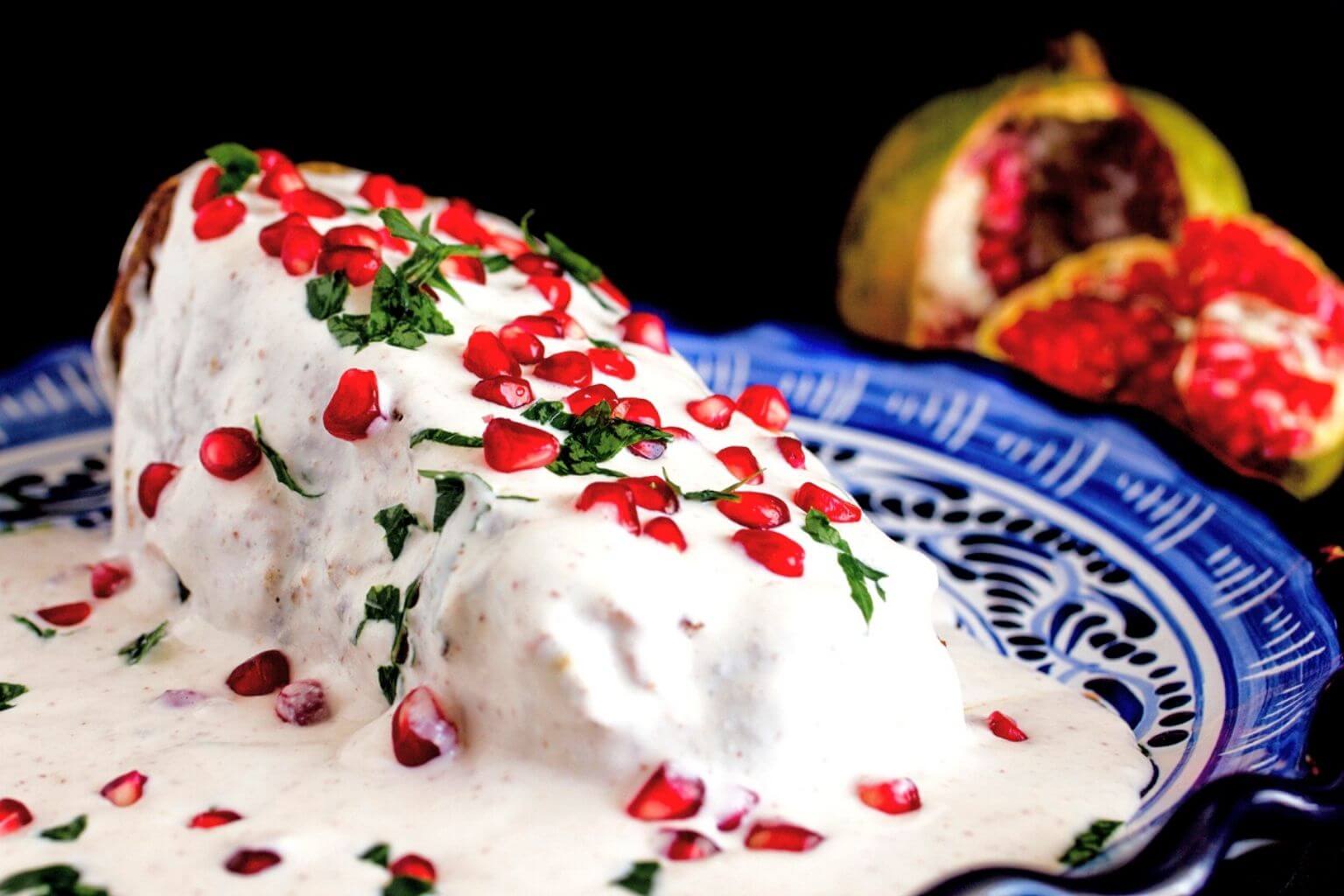
Chiles en Nogada is a very special celebratory dish that originated in Puebla in the 1800s. The dish consists of a blistered poblano chile stuffed with a combination of beef and pork, mixed with chopped apple, pear, peach, almond, raisins, ground cloves and cinnamon. The chile is finished with a “nogada” sauce made with peeled walnuts, almonds, goat cheese and milk, blended until smooth. The dish is then decorated with bright red pomegranate seeds and sometimes chopped parsley.
If you’ve never had it, the flavor combination can be surprising at first. The picadillo filling is sweet and savory at once, the chile itself carries just a gentle heat, the nogada sauce is cool, creamy and slightly nutty, and the pomegranate seeds add a burst of tart brightness on top. It’s a dish built on contrast — sweet against savory, warm against cool, soft against crisp — and that’s exactly the point.
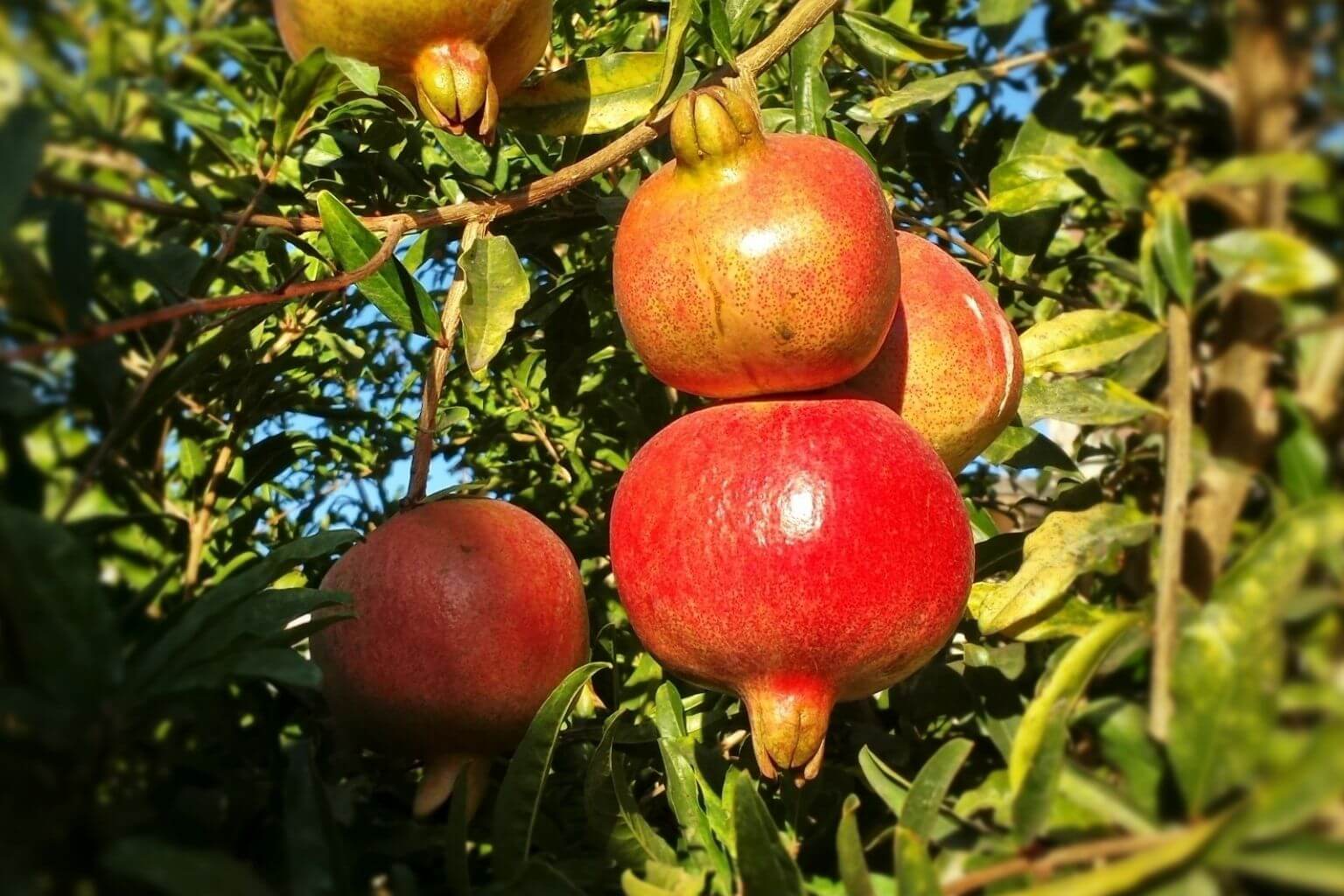
Chiles en Nogada is traditionally consumed in the months of July, August and September in the prelude to the Mexican Independence Day festivities on September 16. This is also the time of year when the Castilla walnut, an essential ingredient in the preparation of the “nogada” sauce, and the pomegranate, another key ingredient, are traditionally harvested. In the state of Puebla, the Castilla walnut is harvested in the municipality of Calpan, where a traditional Chile en Nogada Fair is held every year.
The History of Chiles en Nogada
Chiles en Nogada is a dish that has more than 190 years of tradition and history. The recipe for Chiles en Nogada as we know it today did not appear in written documents until the second half of the 19th century.
As you can imagine, there are different versions of the origin story of Chiles en Nogada. The most romantic version is described by the famous writer Artemio de Valle-Arizpe. He relates a story of three soldiers in the Trigarante army whose girlfriends lived in Puebla.
Excited for Independence and for having their lovers back, the women decided to create a special dish to celebrate the victory and the homecoming. Each one chose an ingredient that represented the color of the army’s flag and thus Chiles en Nogada came to be.

The most popular and most likely theory is that this dish was created in 1821 by the Augustinian nuns of the Santa Mónica convent in Puebla, to celebrate the newly won independence of Mexico.
Legend tells that the Augustinian nuns of the Convent of Santa Mónica (now the Museum of Religious Art) learned that the triumphant military leader, General Agustín de Iturbide, would pass through Puebla on the way to Mexico City. They decided to celebrate the occasion and the victory with a feast.
To prepare a recipe that would impress not only the leader but his entire battalion, the nuns chose seasonal ingredients representative of the various regions of the state. Chiles harvested from San Martín Texmelucan, meat farmed in Cholula, Castilla walnuts from San Andrés Calpan, pears grown at the Convento del Carmen de Puebla, and peaches from Huejotzingo.
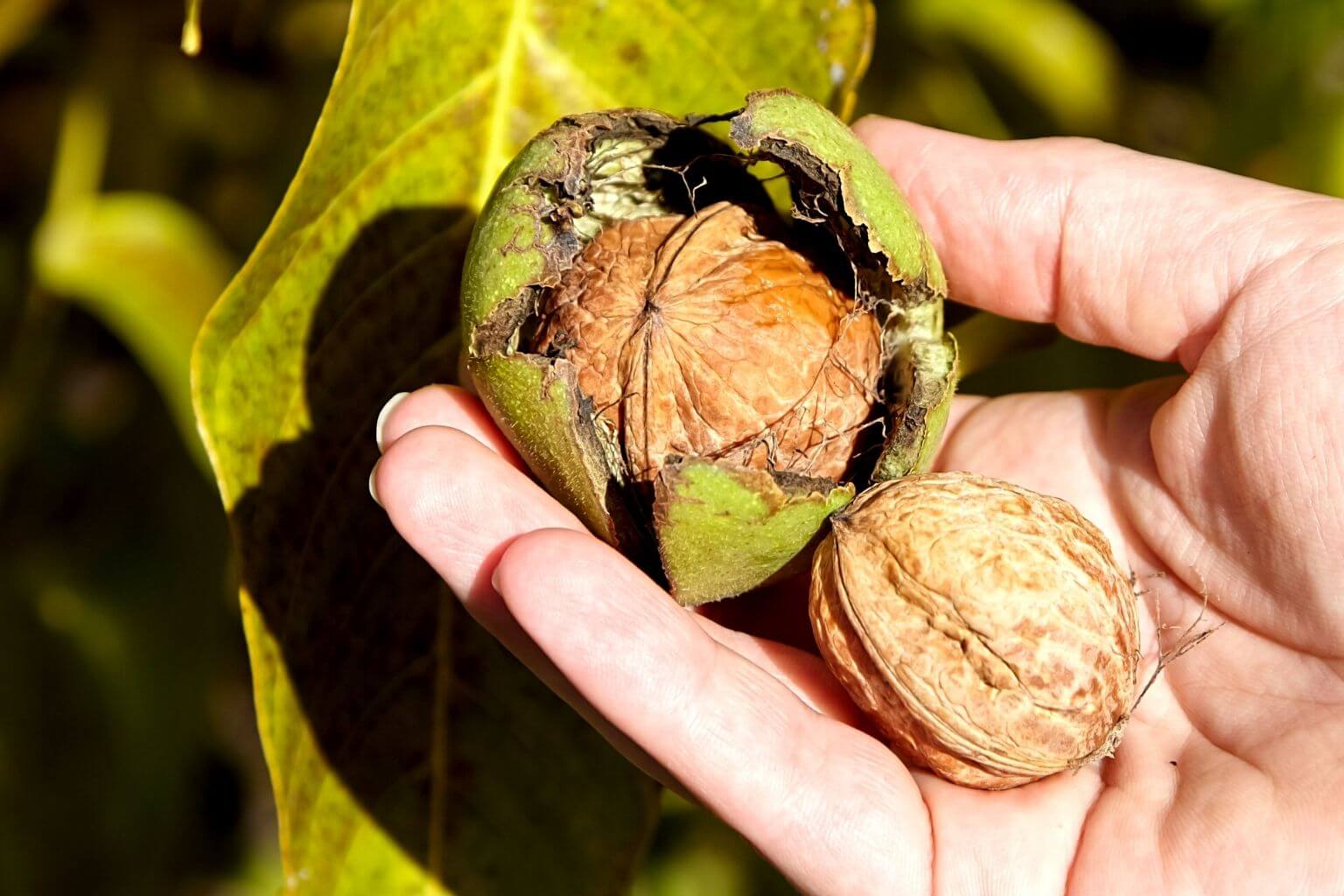
Taking advantage of seasonal products such as pomegranate and the Castilla walnut, the nuns prepared a dish that displayed the colors of the army uniform: green, white and red. This led to the creation of one of Puebla’s most iconic dishes and one that is now loved all over Mexico.
Some accounts suggest that Chiles en Nogada already existed but was presented as a dessert rather than as a main dish as it is served today. Certain scholars of Mexican cuisine believe that Chiles en Nogada evolved from various family recipes from the state of Puebla.
The home recipes converged into a recognized version that shares basic techniques and ingredients, which was then embellished with the white walnut sauce and crimson red pomegranate seeds as a patriotic tribute.
What we know for certain is that the recipe for Chiles en Nogada as we know it today did not appear in any written manuscript until the second half of the 19th century. This suggests that oral tradition has been essential in the preservation of this dish.
Because of its ingredients, in colonial times, Chiles en Nogada was considered a luxurious dish. However, over time as ingredients became more readily available, its popularity spread. The dish is now prepared in homes and restaurants all across Mexico.
Enjoying Chiles en Nogada
The elaboration of Chiles en Nogada is quite involved and time-consuming. There are many ingredients to procure and prepare. You must char and peel the chile, devein and remove the seeds before carefully filling it with the aromatic picadillo mixture of meat, chopped fruits and spices.
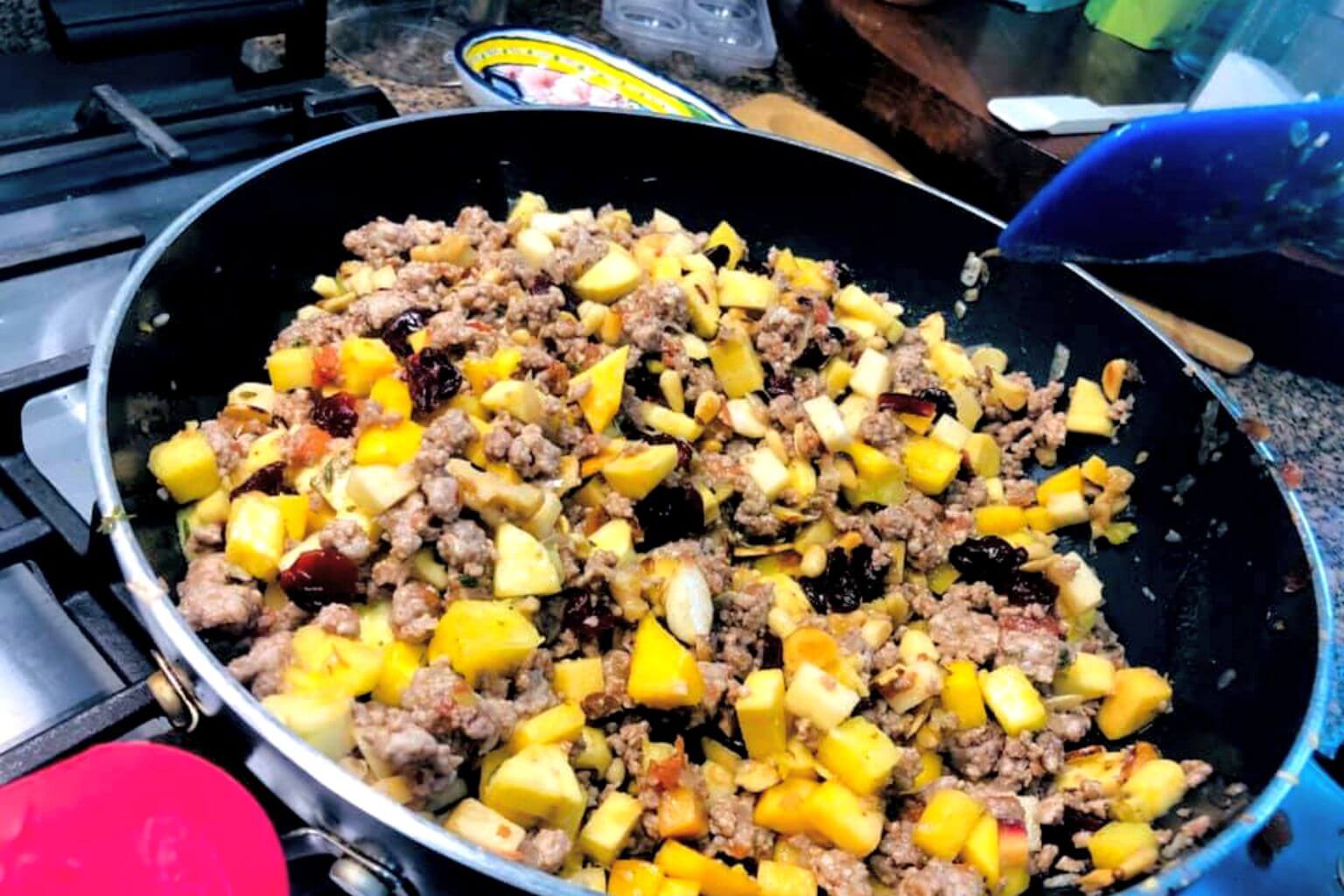
Then comes the nogada sauce, which requires peeled walnuts, ground fine and blended until smooth with goat cheese and milk. Finally, the dish is garnished with ripe pomegranate seeds and fresh parsley. Should you be up to the task, there are some very good recipes to follow online.
Some recipes ask that the chile be battered and fried, others want the chile to be charred and peeled. Whichever recipe you choose, it’s going to be a lot of work but so worth it. If you want to hold true to tradition, serve your Chiles en Nogada on an authentic Talavera plate from Puebla.
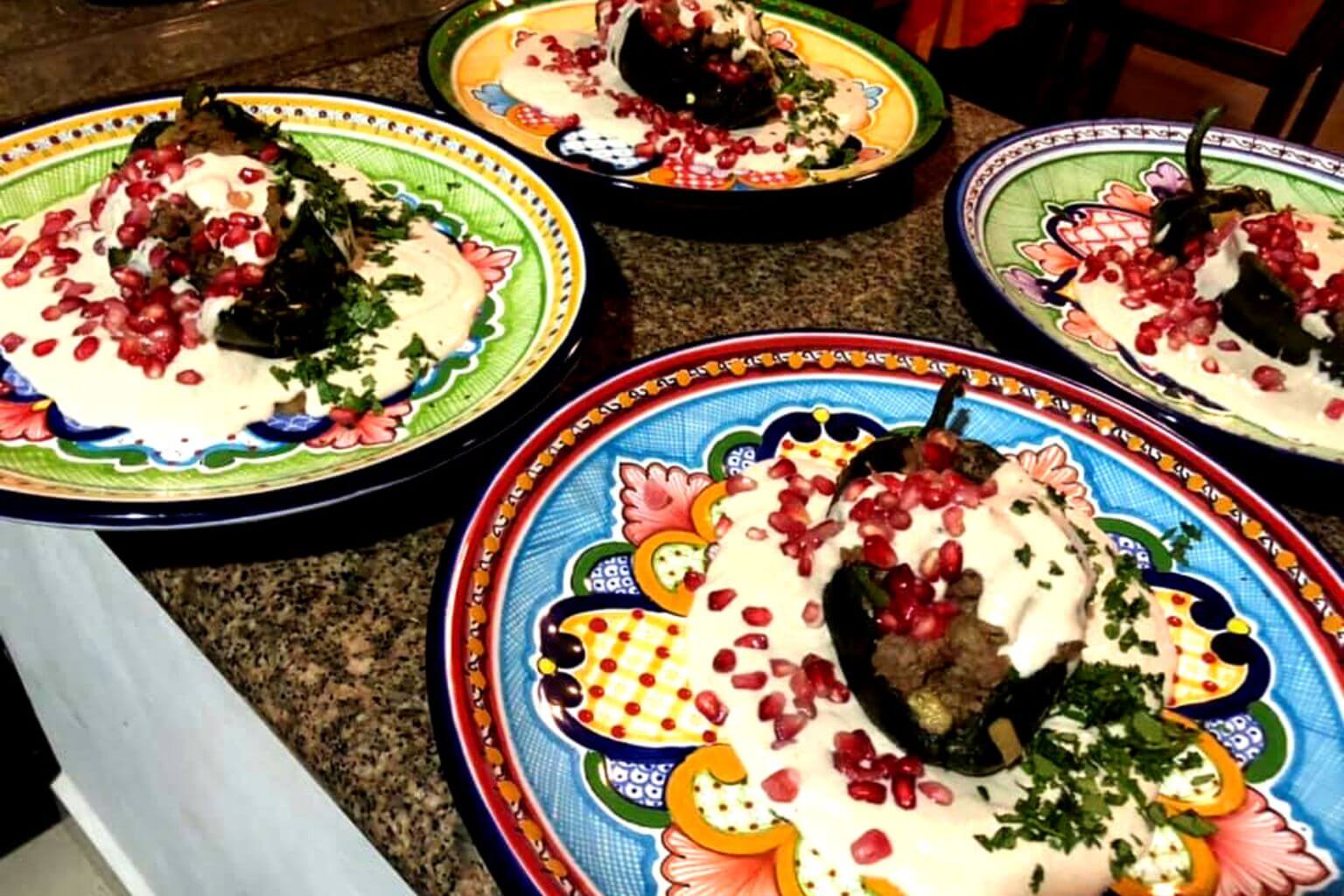
There’s also a long-running debate among cooks over how the dish should be served. Traditionalists insist the chile should never be fried, and that the nogada sauce is best made fresh and served cool, so the contrast against the warm filling isn’t lost. Others prefer the chile lightly battered and fried for texture, served closer to room temperature throughout. Neither approach is wrong — it usually comes down to family tradition.
Where to Try Chiles en Nogada in Puerto Aventuras
In Puerto Aventuras, Chiles en Nogada is served for just a few weeks before and after Mexican Independence Day and is only offered in a few restaurants. Cafe Olé, Restaurante 081 and De Boca en Boca all featured them last season. If you see this dish as a special menu item, I strongly suggest you try this uniquely Mexican dish!
Frequently Asked Questions
Is Chiles en Nogada spicy? Not really. Poblano chiles are mild, and the sweetness of the picadillo and the nogada sauce mellow out any heat. This is a dish built for flavor and color, not spice.
Should Chiles en Nogada be served hot or cold? Both, depending on who’s cooking. The classic Puebla presentation serves the picadillo-filled chile at room temperature with a cool nogada sauce, while some cooks and restaurants serve the chile warm, especially in the battered-and-fried version.
How is Chiles en Nogada different from a stuffed pepper? The filling and presentation set it apart. Rather than cheese, rice or beans, the picadillo mixes meat with fruit and warm spices like cinnamon and clove, and the dish is finished with a chilled walnut cream sauce and pomegranate seeds rather than a tomato-based sauce or melted cheese.
Can Chiles en Nogada be made vegetarian? Yes. Many home cooks and restaurants swap the meat picadillo for a mix of vegetables, nuts and dried fruit while keeping the same spices and nogada sauce. La Cueva del Chango and La Perla Pixan make my favorites.
Viva Mexico!
If you liked this article, you might also enjoy…




1 thought on “Chiles en Nogada: Everything You Need to Know”