
Responsible tourism in Puerto Aventuras takes a commitment from all of us, those of us who live here full time and everyone who visits all have a role to play. Even small actions can have a big impact.
This article isn’t a nod to “eco-tourism”. It’s about being responsible to the place we all enjoy. It’s about being good stewards of the land we occupy, the environment around us, and the nature that makes this place what it is. It’s specific, practical stuff that matters here: on our bay, in our canals, on our beach, in our community.
Bookmark it, share it with houseguests, and come back to it to check for updates.
Protecting the Reef: What We All Can Do
Fatima Bay sits on the Mesoamerican Reef, the second-largest reef system on Earth, and it’s fragile in ways that aren’t always obvious from the surface.
- Don’t stand on coral. A patch that looks gray or “dead” is often still alive, or it’s a nursery surface for a new colony. One footstep can undo years of growth,
- Skip the long free-diving fins in shallow water near the reef crest. They’re the single biggest cause of accidental coral strikes from casual snorkelers — a short snorkel fin, or none at all, is the safer call close to the reef.
- A rash guard beats “reef-safe” sunscreen. Here’s the thing nobody tells you: “reef-safe” isn’t a regulated or certified term in Mexico. No agency tests a product and stamps it. If you want a guaranteed zero-chemical option, a rash guard or UPF swim shirt is it. For any skin you can’t cover, mineral (zinc oxide) sunscreen is the better fallback. Don’t assume the label on the bottle means what it implies.
- Watch for the new Coral Recovery Program now underway here. With active restoration work underway, it’s an even better reason to be deliberate about where you put your feet and your fins while swimming through that part of the bay.
- Leave shells where you found them, even empty ones. They get recycled into the ecosystem — hermit crab housing, calcium cycling — and in a small, enclosed bay like ours, visitors taking shells home adds up to a real, measurable loss.
Read more about Saving the MesoAmerican Reef
Puerto Aventuras Bay and Canal Rules: Boating Etiquette and Safety
Puerto Aventuras is built around its marina and a network of navigable canals, which makes the water part of daily life here. That comes with its own etiquette:
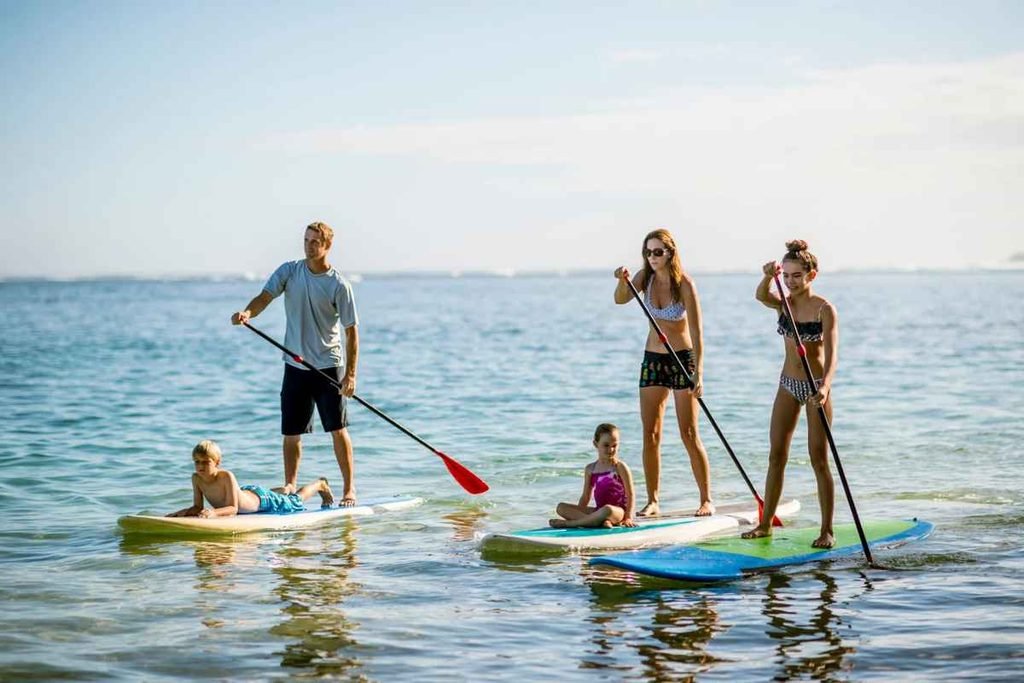
- No motorized watercraft in the bay. The bay is a recreational space, first and foremost, for swimmers, snorkelers, paddle boarders, surfers, and anyone else using it safely. It’s also home to turtles, rays, and other marine life that engine noise and prop strikes put at real risk.
- Go slow through the canals, always. You’ll share them with everything from kayaks and paddle boards to luxury yachts and catamarans. The canals run right up to people’s backyards, and wake damages docked boats and seawalls as much as it endangers wildlife.
- Keep an eye out for eagle rays, sea turtles and even crocodiles, that wander into the canals from the bay or lagoon. This is normal as we sit right where mangrove, lagoon, and marina habitat overlap. Wildlife using the canals is routine.
- Give the mangroves a wide berth. The mangrove fringe around our caletas and lagoons is nursery habitat for a lot of what lives in the bay. If you’re out by kayak or paddle board, don’t cut through the mangrove edges, and don’t anchor in the roots.
- Never feed a crocodile. It’s the single biggest reason crocodiles lose their wariness of people and become a real safety problem.
Beach Cleanup in Puerto Aventuras: The Puerto Bucket Program
- Pack out what you bring in. Cigarette butts, bottle caps, food wrappers. Sargassum season makes litter easier to miss in the seaweed line, not an excuse to leave it.
- Grab a bucket on your way in, fill it with trash you find along the beach, then return it when you’re done. This is a simple, visible way to leave the beach cleaner than you found it.
- Dogs are not allowed on the beach. Even on a leash. Their droppings pose a sanitary risk to bathers and they can disturb turtle nests during the season.
Beach Fire Rules in Puerto Aventuras
This one’s simple: no fires are allowed on the beach anywhere in Puerto Aventuras.
Heat, light, and disturbance near a nesting area can be fatal during turtle season, and it’s bad for beach habitat the rest of the year too.
Sparks from a small bonfire in the dry season can travel to nearby residential palapas and cause a real problem.
Sea Turtle Nesting Season in Puerto Aventuras
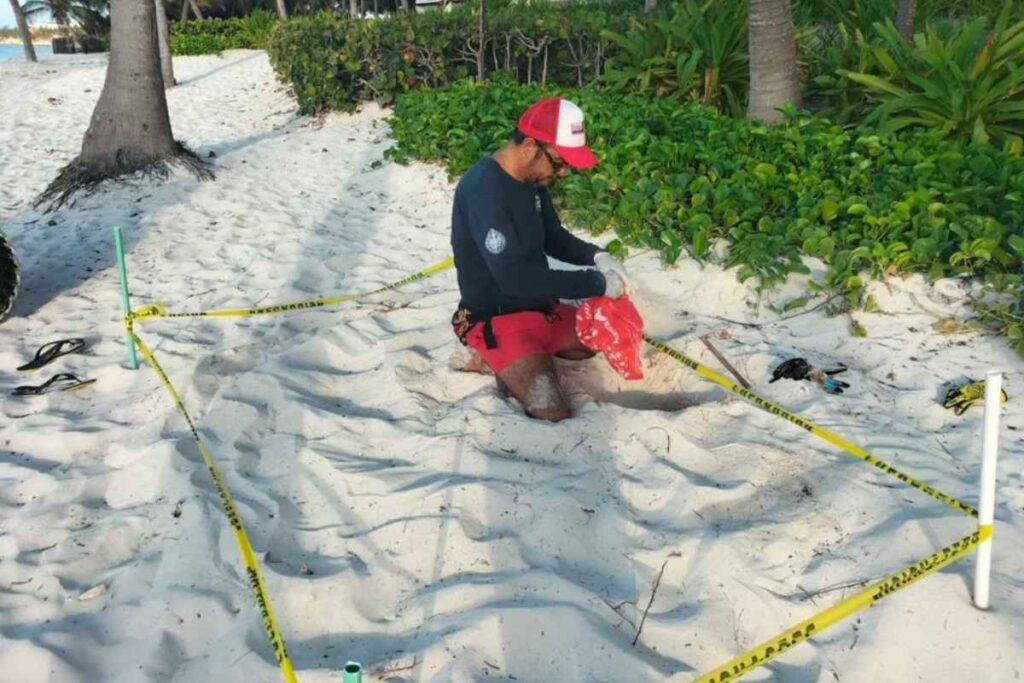
From roughly May through October, our beaches are active nesting ground, and hatching follows some weeks after. We don’t see the nesting volume that areas like Xcacel and Akumal do, but we still need to be responsible hosts to the turtles that find their way back to our beaches.
A few rules make the difference between a nest surviving and not:
- Lights off or shaded on beach-facing balconies and condos during nesting and hatching season. Artificial light disorients both nesting females and hatchlings trying to find the water.
- Bring beach chairs, loungers, and toys in at night. Anything left on the sand can block a nesting female’s path up the beach, or a hatchling’s path down to the water.
- No flash photography on the beach at night during this season.
- Never touch or “help” a hatchling toward the water. That crawl imprints navigation cues the turtle needs for the rest of its life.
- Keep your distance from a nesting female and let her finish undisturbed, no lights, no crowding.
- Report a nest or an injured/stranded turtle to the local monitoring program rather than intervening yourself.
For the full picture on dates, species, and what the local nesting program does, see our deep dive on Riviera Maya sea turtle nesting season.
Sport Fishing in Puerto Aventuras
If you are a fisherman, Puerto Aventuras is the place to be. While most will argue that sport fishing is not eco-friendly at all, when done responsibly with an experienced Captain, we feel like the waters up and down the Riviera Maya can support the number of boats working out of this marina.
If you are coming here to fish, here’s what you need to know.
- Fishing in the bay and the canals is prohibited. This includes fly fishing, net fishing, and spear fishing. Yes, you may see local residents doing it from time to time, but it’s against the rules.
- No harvesting lobster, octopus or conch from the bay. All three are under heavy pressure region-wide and off-limits here.
- Bag limits exist for sports fishing. Set federally by CONAPESCA, they are species specific and they change. Ask your charter operator for current numbers rather than assuming.
- Billfish (marlin, sailfish) are catch-and-release outside of tournament or registered-catch situations.
A reputable charter operator will be upfront about all of this without you having to ask. Treat that level of transparency and responsibility as part of how you decide who to book with. Choose wisely.
Sargassum Season in Puerto Aventuras
One thing most visitors never think about: sargassum season and turtle nesting season overlap for months, and how sargassum gets removed matters. Hand-raking is slow but safe; heavy machinery on the beach can crush or expose nests and strip away the sand eggs need to survive.
If you see machinery working a stretch of beach during nesting season, it’s worth knowing that’s not a given. I’s a trade-off being made.
There is also a new sargassum barrier to consider. The residents association installed a deflection barrier to protect the shoreline of Fatima Bay and Kantenah lagoon. It’s a floating system of bouys and nets, anchored to cement blocks on the ocean floor.
The barrier is designed to steer the floating seaweed away from the bay, so boats can collect it before it reaches the beach, instead of letting it wash in. If you are swimming or paddle boarding in the bay, give it a wide berth. Steer clear of the tether lines and any boats working alongside it.
Responsible Driving in Puerto Aventuras
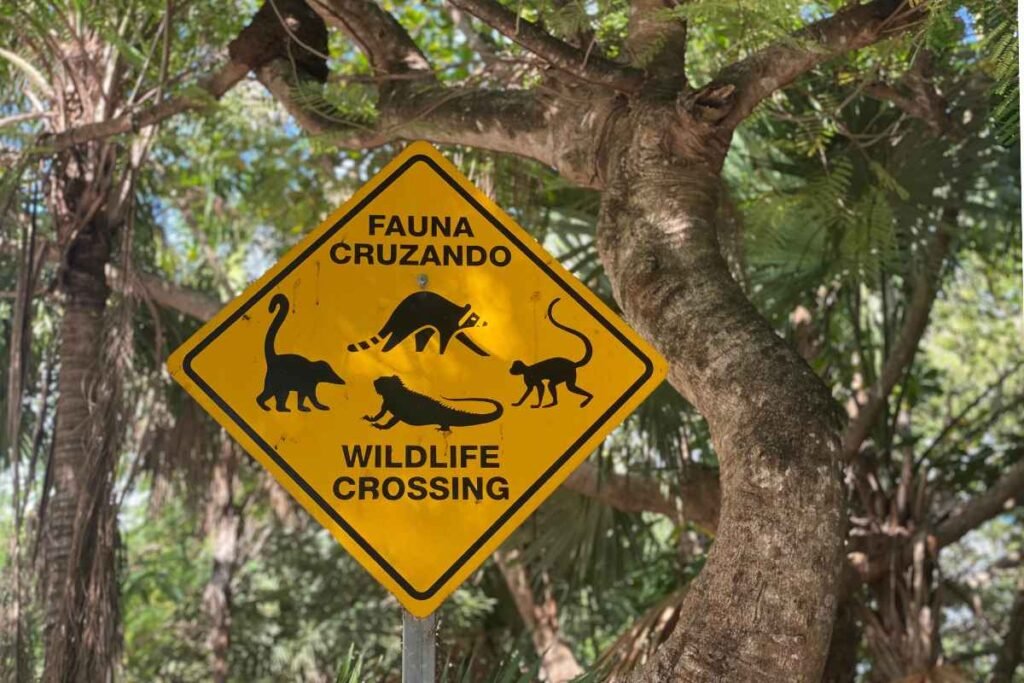
Spider monkeys, iguanas, raccoons, coatis, and other local wildlife cross our roads constantly, especially at dawn and dusk. For a closer look at who you might run into, see our guide to wild animals in Puerto Aventuras.
But it’s not just about protecting wildlife: Watch for people, too. Children and older adults walk, bike and skate along community roadways, in areas where there are no sidewalks.
The speed limit inside the gates is 30 km per hour. That’s plenty fast for a small community like ours. Slow down on the access road and internal streets generally, especially near green areas and the edges of the golf course, where animals cross most often.
If You Find an Injured Animal
If you find an animal that has been abandoned or injured, keep a safe distance, don’t try to handle or approach it. Stay nearby and report the incident to the Puerto Aventuras Wildlife Committee on Whatsapp+52 55 2900 4393. Alejandra Atala will contact the appropriate veterinarian or wildlife expert.
Keep Dogs on a Leash
One of great things about Puerto Aventuras is that it is very pet-friendly. Poeple vacation here with their dogs and are able to bring their dogs almost everywhere. Almost.
But that freedom comes with responsibility. Inside the community, dogs must be leashed at all times. This matters beyond basic courtesy. Puerto Aventuras neighborhoods back onto real jungle, and dogs running loose are a genuine risk to and from local wildlife.
A free-roaming dog can disturb or injure nesting birds, iguanas, and other wildlife. Dogs that wander at night are also potential prey for jaguars.
Leash up, every time, everywhere in the community and don’t forget to clean up after your pooch. There are depositories for used bags throughout the neighborhoods and along the marinas.
Also worth noting: the golf course is private property, not a public recreation space. No dog-walking, soccer-playing, jogging, or cutting across it outside of play.
Don’t Feed the Wildlife
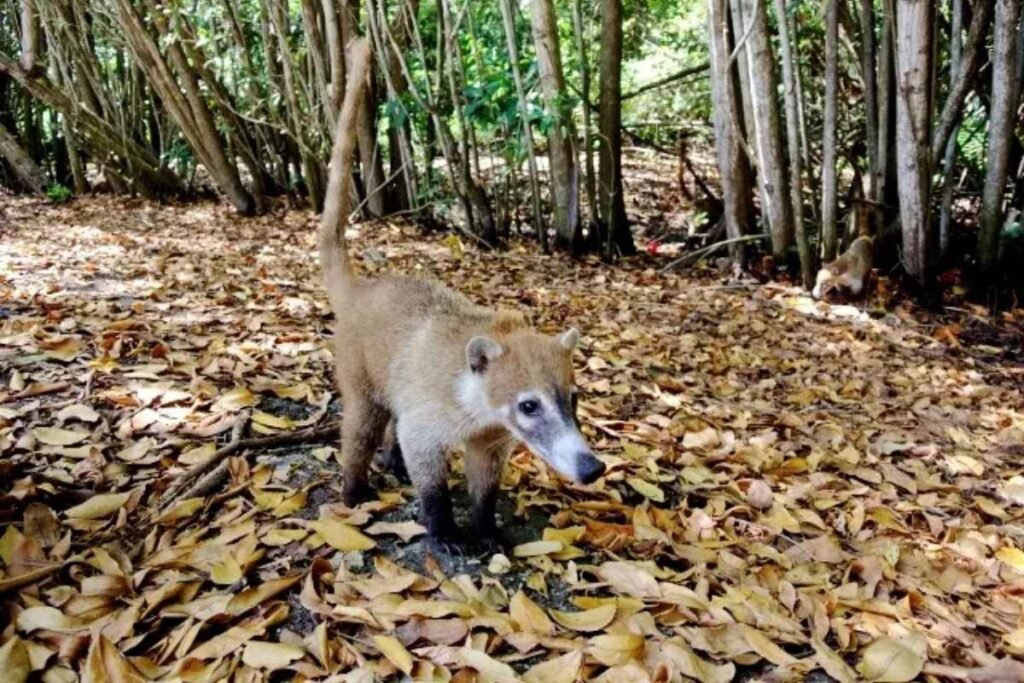
Our resident spider monkeys, raccoons, coatis are all genuinely adorable, and it’s tempting to toss them something for a closer look or a better photo. Don’t. Whatever you’re holding is almost never part of their natural diet, and feeding them teaches them to approach people instead of finding their own food, the way they’re supposed to.
That shift doesn’t end well for the animal. Wildlife that loses its wariness of people ends up hanging around roads, patios, and trash, and eventually gets labeled a nuisance. We’re the ones sharing their space, not the other way around. Learning to share it responsibly means letting them stay wild.
Cenote Etiquette
Every cenote in our area runs on the same basic rules, and they trip up first-timers more than anything else on this list:
- Can you wear sunscreen in a cenote? No. Most gates ban it outright — no exceptions for biodegradable or “reef-safe” formulas.
- Shower before you get in. Every time, no matter how clean you feel.
- Don’t touch stalactites, stalagmites, or exposed tree roots. They’re slow-growing and easily damaged.
- Wear the life vest when one’s required, even if you’re a strong swimmer — some open cenotes run 30–50 meters deep with cold thermoclines that can cramp you up fast.
- Leave the drone at home. They are widely banned, for good reason.
It’s worth remembering these aren’t just pretty swimming holes. Cenotes carry deep cultural and historical significance to the Maya, and treating them that way is part of visiting well.
Spend Like a Local
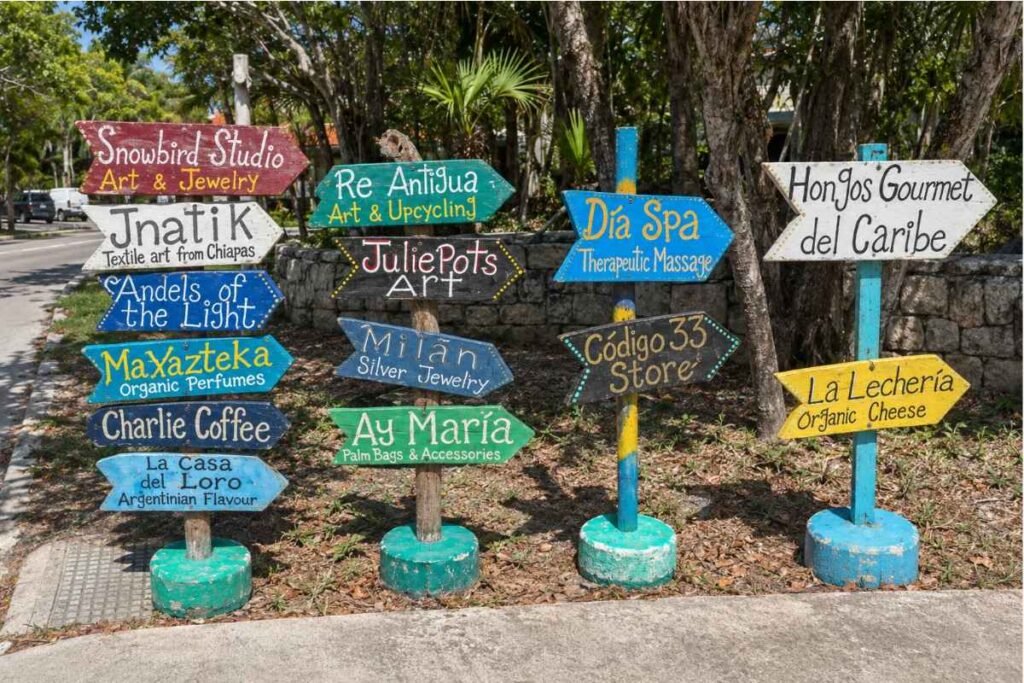
The easiest way to be a responsible tourist here is also the most enjoyable: spend your money at the marina’s independent restaurants, with local guides, and at local shops, rather than exclusively through an excursion desk. Even if you staying at one of our all-inclusive resorts, make an effort to get “off campus” and investigate the options the community has to offer.
Sign up for a beachfront yoga class at The PA Fitness Place. Maybe take a day sail and snorkel trip on the Catamaya. Shop from local artisans and producers at the La Lomita market. Listen to some live music at Nauti Burro or dance the night away under the big palapa at Latitude 20°.
After years of relationships with businesses across this community, I can tell you the difference shows up in the experience, not just the ethics of it. Meet the business owners, talk to the locals and you’ll soon figure out why so many people come back year after year. Some even decide to stay.
Our stand on captive animal encounters
Puerto Aventuras Living does not support captive animal tourism. We do not promote or support dolphin swims, manatee encounters, or anything built around animals held for that purpose regardless of how it’s marketed.
If getting close to local wildlife is part of why you’re visiting, that desire deserves a better answer than a tank.
The better answer is a reputable rescue or sanctuary, where the animals are there because they need to be, not because people pay to see them. We recommend Akumal Natura Sanctuary to our visiting friends and family. They have taken in and rehabilitated many of the animals abandoned or injured in our community and we are happy to support their efforts.
None of this is complicated
I’ve lived and worked in and around Puerto Aventuras for more than 20 years. Long enough to watch the sargassum first arrive and then go and then come back with a vengeance. I’ve seen the reef take hits from ill-advised beach recovery efforts and slowly come back to life.
Most of what’s above comes down to the same handful of good instincts: look before you touch, slow down, leave no trace, and ask before you assume a rule doesn’t apply to you.
Puerto Aventuras stays the place people fall in love with because the people who live and visit here regularly take that seriously. And now you know exactly how.
Want the practical, local stuff like this delivered weekly? Subscribe to the Riviera Maya Insider newsletter.