
One of the most common questions I hear from people considering a move to the Riviera Maya is, “What about healthcare?”
It’s a very fair concern. Warm weather, lower living costs and proximity to the Caribbean are all very appealing, but you also need to know that you can find a good doctor and receive appropriate treatment in an emergency.
The reassuring answer is that healthcare in Mexico can be very good, particularly within the private system. Here in the Riviera Maya, residents have access to private hospitals, walk-in clinics, laboratories, pharmacies and a growing number of specialists. English-speaking medical professionals are also relatively easy to find.
The system works differently than it does in the United States or Canada, however. Understanding where to go, how you’ll pay and what your insurance actually covers can prevent a great deal of confusion later.
How Healthcare in Mexico Works
Healthcare in Mexico is divided between public and private systems.
Public care is available through institutions such as the Mexican Social Security Institute, better known as IMSS. The private system includes independent doctors, clinics, laboratories and hospitals.
Most foreign residents who can afford to do so use private healthcare for routine appointments, diagnostic testing, specialist consultations and emergencies. Private appointments can often be scheduled quickly, and patients can usually contact specialists directly without first obtaining a referral from a general practitioner.
Many residents pay out of pocket for routine care because consultations, dental work, blood tests and common prescriptions can be relatively affordable. They then carry insurance to protect themselves against the much higher cost of surgery, cancer treatment, intensive care or a lengthy hospital stay.
That combination works well for many people, but it requires a little advance planning.

Private Hospitals in the Riviera Maya
Playa del Carmen has the largest concentration of full-service private hospitals in the central Riviera Maya.
Hospiten Riviera Maya provides 24-hour emergency care, hospitalization, surgery, intensive care, diagnostic imaging and laboratory services. Its medical specialties include cardiology, internal medicine, gastroenterology, orthopedics, pediatrics, pulmonology, urology and gynecology.
Hospital Costamed Playa del Carmen also offers emergency medicine, intensive care, surgery, imaging and laboratory services, along with access to numerous specialists. Costamed operates additional facilities in Tulum, Puerto Morelos and Cozumel, as well as private ambulance services in several communities.
Amerimed Playa del Carmen provides hospital, emergency, imaging and laboratory services, with bilingual assistance available.
Tulum, Puerto Aventuras and Puerto Morelos have private clinics and emergency facilities, but their capabilities are more limited than those in Playa del Carmen and Cancún. A patient who needs advanced surgery or specialized treatment may need to be transferred to a larger hospital.
Cancún has several major private hospitals, including Hospital Galenia, with advanced cardiology, neurology, oncology and other specialty services.
You don’t need to travel to Cancún for every medical appointment. The point is to know what your closest facility can handle and where you might be transferred if you require a higher level of care.
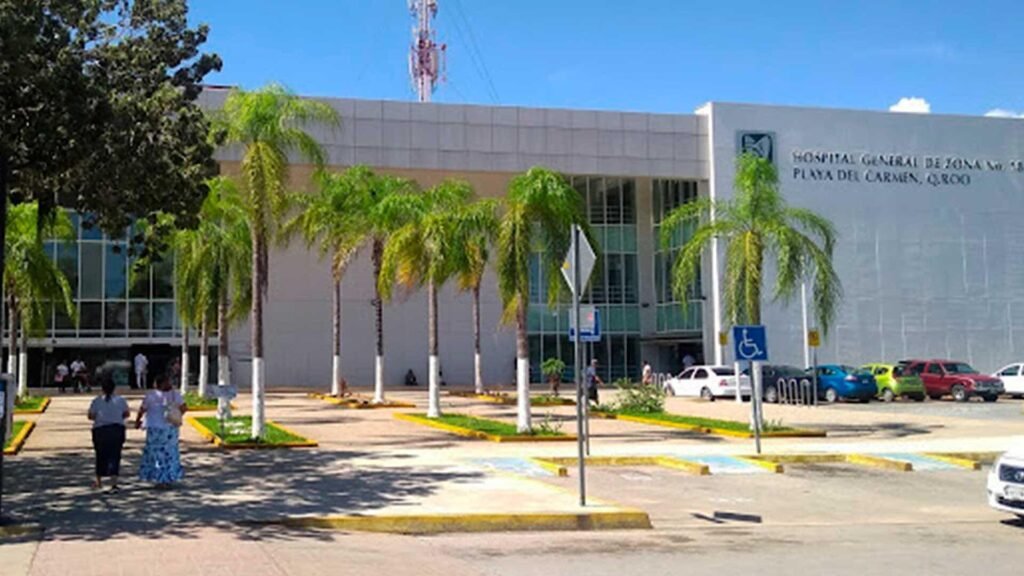
What about Public Healthcare in Mexico?
Foreign residents may be eligible to receive public healthcare through IMSS.
Foreigners who work legally in Mexico may be registered through their employers. IMSS also has a voluntary enrollment option for certain self-employed foreign residents. Depending on eligibility and the program selected, coverage may include consultations, medications, emergency treatment, hospitalization, surgery and specialist care.
The IMSS program for independent workers provides more information about enrollment for foreigners living in Mexico.
IMSS doesn’t operate like private insurance. Patients are assigned to particular clinics and generally follow the public system’s referral process. Wait times, appointment availability and facility conditions can vary. Certain illnesses and pre-existing conditions may also be subject to exclusions or waiting periods under voluntary enrollment programs.
Some foreign residents rely primarily on IMSS. Others enroll as a backup while continuing to pay privately for routine appointments and specialist care.
Mexican residency alone doesn’t automatically enroll you in public healthcare. You must apply through an eligible program.
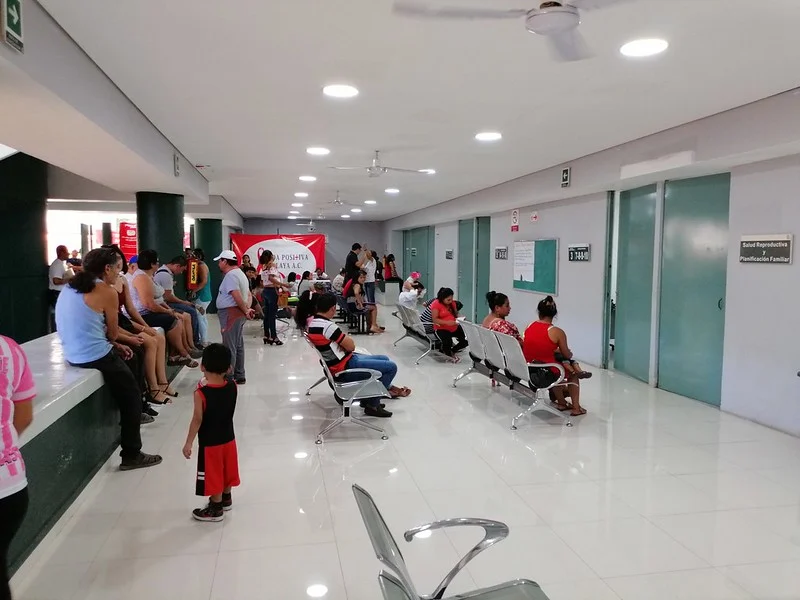
Is Healthcare in Mexico Inexpensive?
Routine private care often costs considerably less than an uninsured patient might pay in the United States. This makes it practical for many Riviera Maya residents to pay cash for office visits, bloodwork, dental care, basic imaging and common medications.
Major private medical treatment is another story.
Surgery, intensive care, cancer treatment and an extended hospital stay can produce a substantial bill. Private hospitals may also request a deposit before admitting a patient or beginning treatment.
Even if you have insurance, the hospital may need authorization or a formal guarantee of payment from the insurer. If direct billing hasn’t been arranged, you could be required to pay the hospital and apply for reimbursement afterward.
Before a planned procedure, request a written estimate and ask whether it includes every provider involved. The hospital, surgeon, anesthesiologist, radiologist and other medical professionals may charge separately.
Questions to ask include:
- Is this hospital in my insurer’s approved network?
- Does the hospital bill my insurer directly?
- Is preauthorization required?
- What deductible and coinsurance will I owe?
- Are the surgeon and anesthesiologist covered at the insurer’s approved fee level?
- Will the hospital require a deposit?
- Could any charges require payment followed by reimbursement?
These are much easier questions to answer before someone in your household needs surgery.
Your Private Health Insurance Options
People looking for private healthcare in Mexico will generally encounter three types of coverage: Mexican major-medical insurance, international health insurance and travel medical insurance.
They aren’t interchangeable.
A Mexican major-medical plan usually covers eligible treatment within Mexico through a defined hospital network. The policy may be issued in pesos, and its premiums, deductibles and maximum benefits may also be denominated in pesos.
International health insurance may cover treatment in Mexico and other countries. The exact coverage depends on the geographic region selected. Plans that include care in the United States are usually more expensive than policies covering Mexico alone or Mexico plus other countries outside the United States.
Travel medical insurance is designed for temporary trips and unexpected illnesses or injuries. It may be useful for visitors, but it isn’t necessarily appropriate for someone living in Mexico throughout the year.
Don’t choose a policy based on the monthly or annual premium alone. Mexico’s financial-services consumer agency, CONDUSEF, recommends reviewing the deductible, coinsurance, exclusions, waiting periods, medical-fee schedule and hospital network.
The deductible is the amount you must pay before eligible insurance benefits begin. Coinsurance is the portion of covered costs you continue to pay after satisfying the deductible. CONDUSEF provides an explanation of these policy terms.
A lower-cost policy may have a high deductible or a restricted hospital network. That can make sense if you plan to pay directly for routine healthcare in Mexico and want protection against a major medical bill. It won’t help much if the deductible is more than you could reasonably produce during an emergency.

Pre-existing Conditions and Waiting Periods
Pre-existing conditions can complicate the process of obtaining private health insurance.
Depending on the condition and the insurer, an application may be accepted with an exclusion, an increased premium or limited benefits. An insurer may also decline the application. You generally won’t know the final terms until the company completes its medical underwriting.
Disclose your health history honestly and completely. Omitting a diagnosis, medication or previous treatment could cause a claim to be denied later.
Policies may also impose waiting periods for particular illnesses, surgeries or maternity benefits. These rules vary by insurer and policy. In some cases, proof of continuous previous coverage may affect the terms offered, but this is never something to assume.
Age also matters. Premiums normally increase as you get older, and some insurers restrict the age at which a new applicant may enroll. If you’re planning to retire in Mexico, it’s better to compare policies before you reach the insurer’s entry-age limit or develop a condition that could affect your eligibility.
Will Medicare Cover Healthcare in Mexico?
In most situations, Medicare doesn’t cover healthcare received in Mexico.
Medicare confirms that coverage outside the United States is generally limited to a few narrow exceptions. Medicare Part D also doesn’t cover prescription medications purchased outside the United States.
Some Medicare Advantage or Medigap policies include limited foreign emergency benefits, but coverage varies. Check the specific terms of your policy before relying on it.
Canadians should also confirm how their provincial plan treats care received in Mexico. Any reimbursement may be limited to the amount the provincial system would have paid at home. Patients may also have to pay the Mexican hospital first and apply for reimbursement later.
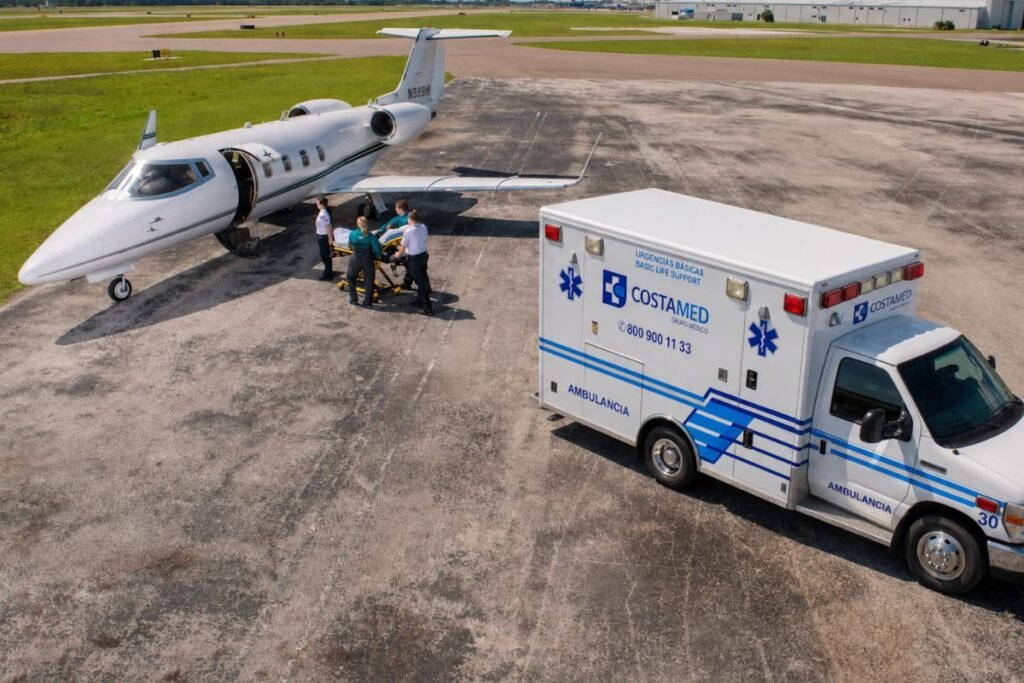
Medical Evacuation is Separate from Medical Care
Some health insurance policies include emergency transportation, but that doesn’t necessarily mean you’ll be flown back to the United States or Canada.
A policy may cover transportation only to the closest appropriate medical facility. Depending on your condition, that hospital could be in Playa del Carmen, Cancún, Mérida or Mexico City. Once you reach a facility capable of treating you, the insurer may have met its obligation.
Coverage that allows transportation to a hospital of your choice or repatriation to your home country is different. If returning home for major treatment is part of your plan, ask:
- Who decides whether an evacuation is medically necessary?
- Can you choose the destination hospital?
- Does the benefit cover international transportation?
- Is repatriation included?
- Does the policy pay the provider directly?
- What happens if you’re stable enough to receive treatment in Mexico?
The phrase “medical evacuation included” doesn’t tell you enough on its own.
Pharmacies and Everyday Medical Care
Pharmacies are easy to find throughout the Riviera Maya, and many have an adjacent low-cost doctor’s office. These consultorios can be useful for minor illnesses, simple evaluations and prescription renewals.
They shouldn’t replace a regular primary-care doctor who knows your health history.
Finding a doctor shortly after moving is particularly important if you take ongoing medication or have a chronic condition. Bring copies of your medical records, recent test results, current prescriptions and a list of allergies. Keep a record of both the brand and generic names of your medications because Mexican brand names may be different.
Some medications available over the counter elsewhere require a prescription in Mexico. Others are sold under different dosages or formulations. Never assume that a product with a familiar-sounding name is identical to the one you use at home.
You can verify a doctor’s professional license, or cédula profesional, through Mexico’s National Registry of Professionals. A specialist should also have the appropriate specialty credentials.
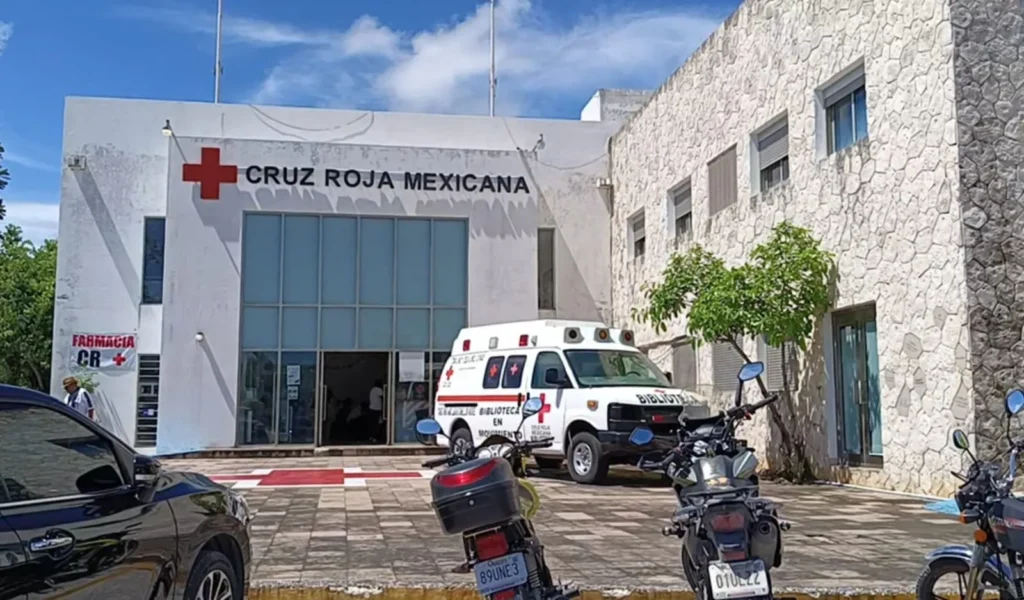
The role of the Mexican Red Cross
The Mexican Red Cross, or Cruz Roja Mexicana, is another part of healthcare in Mexico that residents should understand. It is a nonprofit humanitarian organization rather than a government agency or private hospital.
The Playa del Carmen delegation responds to medical emergencies and provides ambulance and prehospital care. It also offers some non-emergency health services, which may include medical consultations, diagnostic testing and community health programs. Available services and hours can change, so contact the local delegation directly before visiting for routine care.
During a serious emergency, call 911. The dispatcher can coordinate the closest available emergency response, which may involve the Red Cross, municipal emergency services or another ambulance provider. Keep in mind that the ambulance arriving at your home may not be connected to the private hospital or insurance network you prefer.
The Red Cross can stabilize a patient and provide transportation, but it is not a substitute for major-medical insurance or a full-service hospital. If you’re transported to a private facility, that hospital may still request a deposit or confirmation of insurance coverage before continuing treatment.
It’s also helpful to know that Cruz Roja Mexicana depends heavily on donations and volunteers. Ambulance availability and response times may vary according to location, demand and the resources available at the local delegation.
Save the contact information for the closest Red Cross delegation along with 911, your preferred private hospital and a private ambulance provider. If you live in Puerto Aventuras, Akumal, Tulum or another community outside central Playa del Carmen, ask your condominium administration or security office which emergency service normally responds to your address.
Build a Healthcare Plan Before You Need It
Your healthcare plan doesn’t need to be complicated.
Choose the private hospital you would use locally and save its emergency, ambulance and admissions numbers. Confirm whether the hospital is included in your insurance network and whether direct billing is available.
Keep paper and digital copies of:
- Your insurance policy and membership card
- Passport or other identification
- Mexican residency card
- Current medication list
- Allergies and major medical conditions
- Emergency contacts
- Your preferred hospital and doctor information
Mexico’s national emergency number is 911. It’s also sensible to save the number of a private ambulance company, especially if you live outside a town center or inside a gated residential community.
Make sure family members, houseguests and security personnel know how to give clear directions to your home. Street names, gate numbers, condominium names and nearby landmarks can all help an ambulance find you more quickly.
Finally, maintain access to enough money or available credit to cover your deductible and a possible hospital deposit. Having insurance doesn’t guarantee that authorization or direct billing will happen immediately.
What is the Best Healthcare Option in Mexico?
There isn’t one arrangement that works for everyone.
Your best option will depend on your age, medical history, budget, residency status, tolerance for financial risk and how much time you spend in Mexico.
Many Riviera Maya residents use a combination of:
- Out-of-pocket payment for routine private care
- Mexican or international major-medical insurance
- IMSS eligibility or enrollment
- Separate medical evacuation coverage
- Continued insurance in their home country
For most foreign residents, healthcare in Mexico isn’t the obstacle they feared before moving. Routine private care is accessible, Playa del Carmen has several full-service hospitals and Cancún offers more advanced specialty treatment when needed.
The system does expect you to take more responsibility for understanding payment and coverage. Know where you would go, confirm how you would pay and read the details of any insurance policy before you need to use it.
Healthcare in Mexico can be very good. The trick is having a plan before you’re standing at the admissions desk.
This article provides general information and should not be considered medical, legal or insurance advice. Eligibility, benefits, exclusions and hospital arrangements vary by provider and policy.