
There is much more to Quintana Roo than beaches, cenotes and resort towns. Experiencing the Festival of Kantunilkín offers travelers and local residents alike a chance to see another side of the region, one shaped by faith, Maya traditions, family promises and more than a century of community participation.
Held each year from November 30 through December 12, the festival honors the Virgin of Kantunilkín, the patroness of this small inland town in northern Quintana Roo. Formally, she is the Virgin of the Immaculate Conception. Locally, however, she belongs so completely to the town’s history that she is simply known as the Virgin of Kantunilkín.
This is a meaningful experience for religious travelers, but you don’t have to be Catholic to appreciate it. The festival also welcomes those who are curious about the traditions, food and community life that continue beyond the Riviera Maya’s tourism corridor.
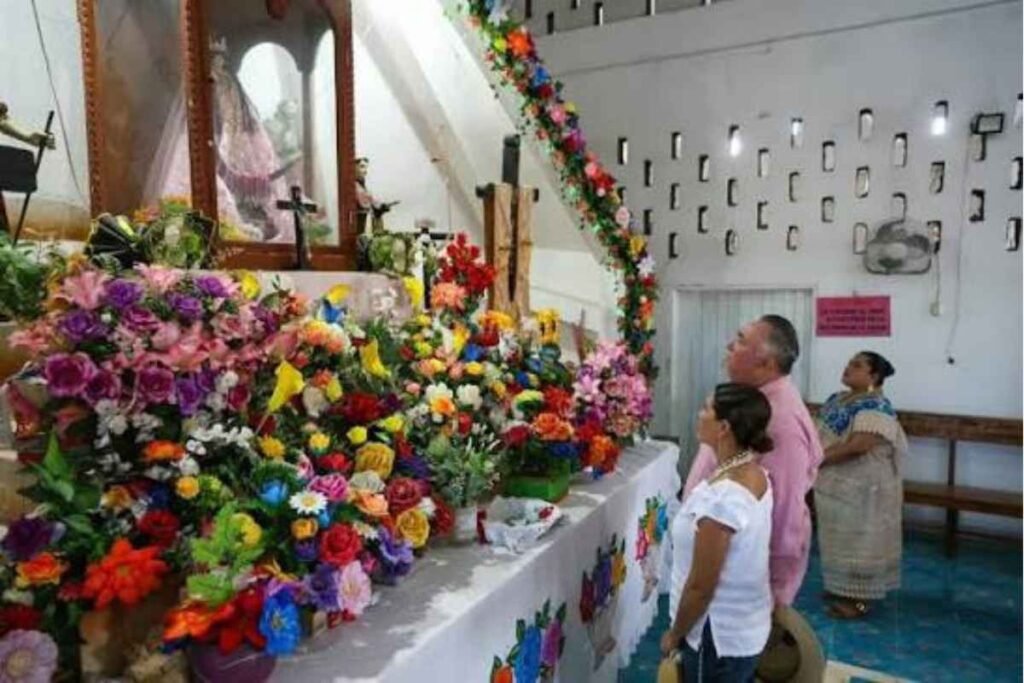
A festival built on faith and promises
The Virgin’s history in Kantunilkín dates back to at least the 19th century. Local historian José Moisés Gaspar Maglah Canul places the construction of the first regional-material church dedicated to the image around 1864. Over time, devotion to the Virgin became closely connected with Maya ceremonies and beliefs already present in the community.
Today, the celebration is organized with the help of seven traditional gremios, or guilds, and 12 diputados de plaza. These aren’t honorary titles. The organizers accept a personal responsibility to provide food, music, ceremonies and other parts of the festival, often using their own savings.
Some commitments are made in gratitude for an answered prayer or protection during a difficult time. Others are handed from one person to another through a formal promise that may continue for years. That sense of obligation is part of what separates the festival from an ordinary municipal fair.
What visitors can expect to see
The formal celebration begins before sunrise on November 30. At approximately 5:00 a.m., families gather at the parish church to sing mañanitas and watch the Virgin being lowered from her niche. She remains outside the niche during the religious festivities, allowing worshippers to approach, pray and fulfill their promises.
Later that day comes one of the festival’s most distinctive traditions: the cutting of the ceiba. The ceiba tree is sacred in Maya culture, connecting the earth with the heavens and the underworld. Residents carry the large tree through town, first to the church and then to the traditional bullring in the Expo neighborhood, where it is planted.
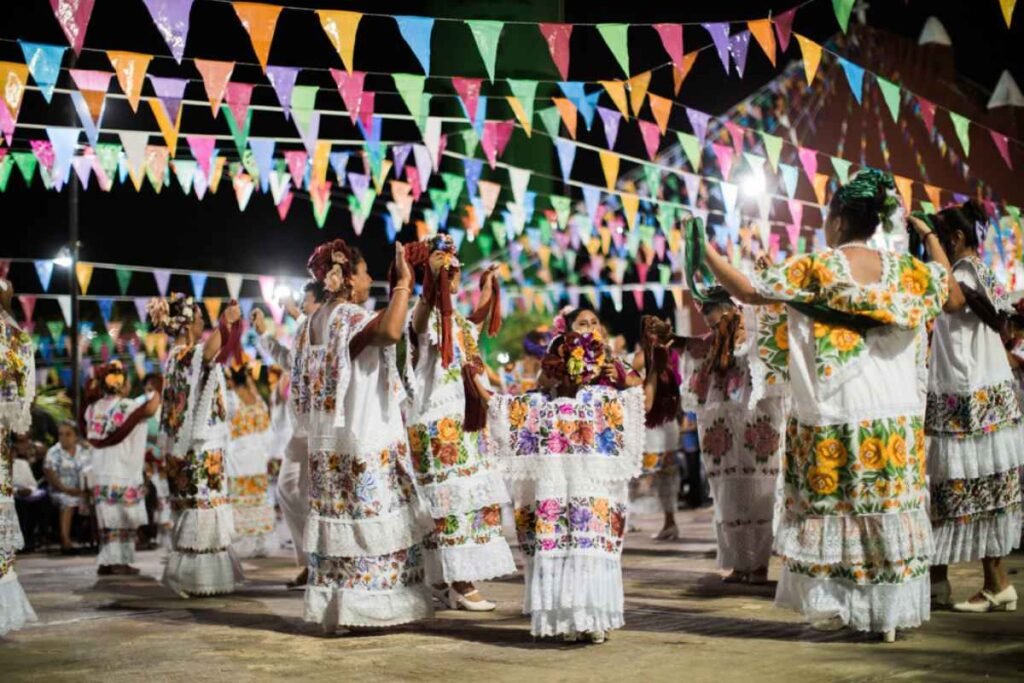
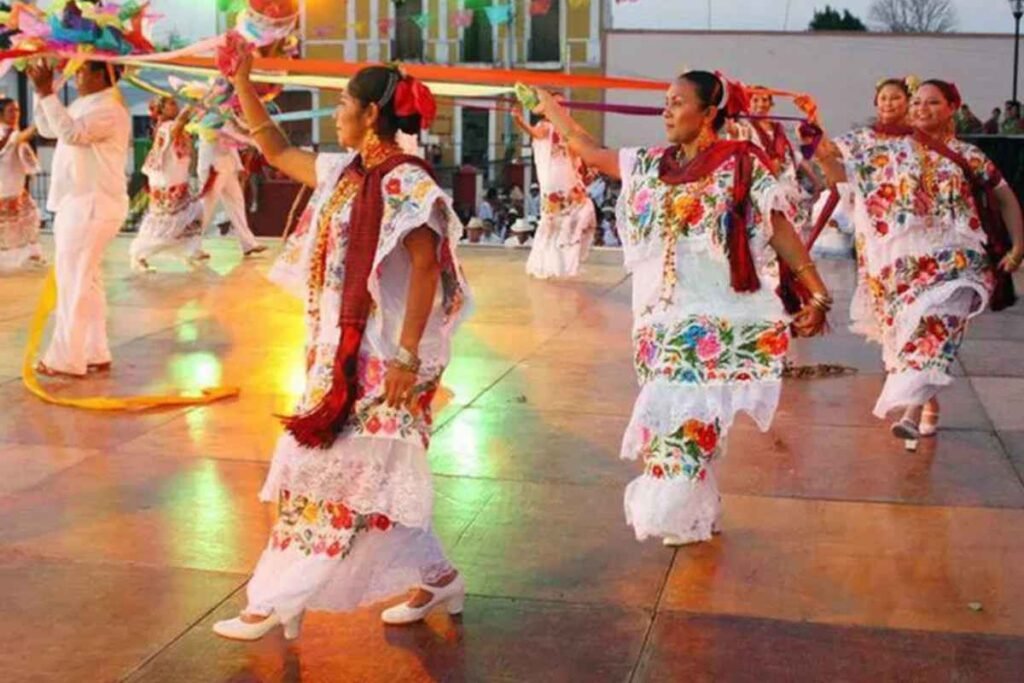
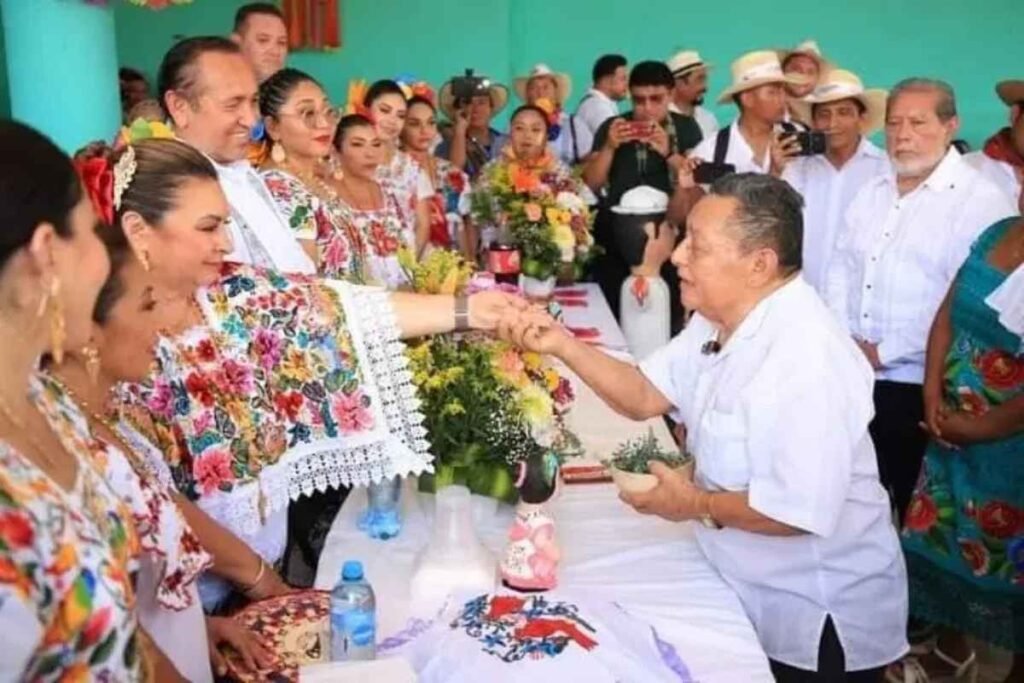
The evening brings the official opening, an alborada and a vaquería accompanied by jaranera orchestras. Dancers arrive in regional clothing and perform the jarana, the quick-footed traditional dance of the Yucatán Peninsula.
Throughout the festival, visitors may encounter:
- Gremio processions moving through the streets with music and religious banners
- Prayers and ceremonies conducted in both Spanish and Maya
- Jarana dancing and live orchestras
- Fireworks and voladores
- Evening dances, mechanical rides and vendor stalls
- Families gathering at the church to light candles
- Traditional bull events at the Expo fairgrounds
The atmosphere changes throughout the day. Mornings tend to be more religious and family-oriented. Afternoons bring food, processions and activity around the fairgrounds. Nights are louder, busier and considerably less concerned with bedtime.
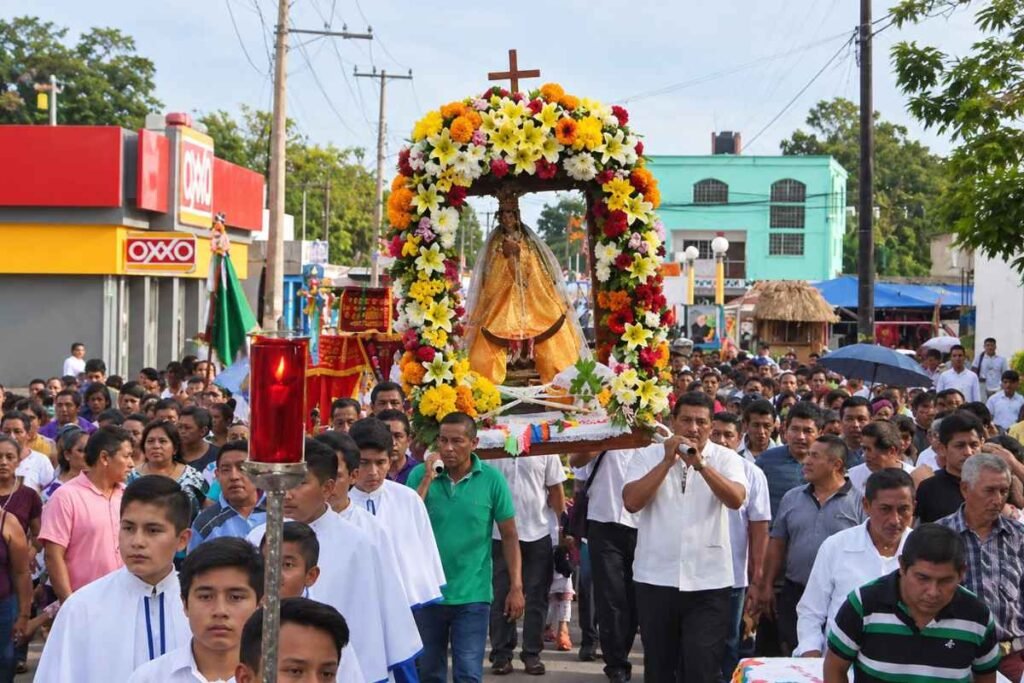
The December 8 procession
If you can attend only once, December 8 is the most important day.
At approximately 10:00 a.m., the Virgin is carried through the center of Kantunilkín in a large procession accompanied by traditional music, Maya prayers, gremios and worshippers from neighboring communities. Some participants walk in gratitude for prayers they believe the Virgin has answered. Others return every year because the celebration has been part of their family life for generations.
That evening, people gather at the church with candles and wait for the Virgin to be returned to her niche around midnight. This marks the end of the principal religious observances, although the public fair and bull events continue through December 12.
What to eat at the festival
Food is central to the celebration. Organizers prepare large quantities of regional dishes, often beginning with the butchering and cooking several days before their assigned gremio celebration.
The dish most closely associated with the festival is relleno negro, a dark, smoky stew made with recado negro, a seasoning paste prepared from deeply toasted chiles and spices. It may include turkey, chicken or pork, depending on the family recipe.
Visitors may also find:
- Cochinita pibil, pork seasoned with achiote and slow-cooked until tender
- Chicharra, crispy pieces of fried pork
- Higadilla, a traditional seasoned pork dish
- Chocolomo, a hearty regional meat broth
- Tortillas, pickled onions and fresh salsas
- Panuchos, salbutes and other familiar Yucatecan snacks at the fair stalls
Some food is sold by vendors in the center of town. Other meals are prepared in the homes of gremio members and festival organizers. Local tradition calls for feeding those who arrive while food remains in the pot. If you are invited into a home or offered a plate, accept graciously and remember that you are receiving hospitality, not sampling from a tourist buffet.
Where is Kantunilkín?
Kantunilkín is the municipal seat of Lázaro Cárdenas, in northern Quintana Roo. It lies inland, southwest of Chiquilá and Holbox and northwest of Playa del Carmen.
The main festival activity is spread between:
- The Church of the Immaculate Conception
- The central park and main municipal dome
- Streets surrounding the town center
- The Expo fairgrounds and traditional bullring
Kantunilkín is a working town rather than a polished tourist destination. That is part of its appeal, but visitors should expect busy streets, improvised parking and fewer English-language services than they would find in Playa del Carmen.
How to get to Kantunilkín
Driving is the easiest option from Puerto Aventuras and the Riviera Maya.
From Puerto Aventuras, drive north on Highway 307 toward Playa del Carmen. From Playa, follow Avenida Luis Donaldo Colosio to the entrance of Highway 305D, the toll road toward El Tintal and Nuevo Xcan. Take the turn toward Kantunilkín before continuing north toward Chiquilá.
Allow approximately:
- 90 minutes from Puerto Aventuras
- One hour from Playa del Carmen
- 75 to 90 minutes from Cancún
- Around two hours from Tulum
Times will vary with traffic, road construction and your starting point. Bring pesos for tolls, fuel up before leaving and download your route before the drive. Cell service can be inconsistent on some stretches.
Direct buses and shared transportation operate between Cancún and Kantunilkín. Travelers coming from Playa del Carmen or Puerto Aventuras will usually need a connection, making the journey considerably longer. For a same-day festival visit, a rental car or private driver is the most practical choice.
Planning your visit
Arrive early, particularly on November 30 or December 8. Streets around the church and central park may be closed for processions, vendors and rides. Parking a few blocks away and walking into the center is often easier than trying to get close to the main activity.
Bring cash in small denominations. Comfortable shoes, drinking water, sunscreen and a hat will make the daytime hours easier. If you plan to remain for the evening, bring a light layer and be prepared for loud fireworks.
There is no general admission charge to enter the town or watch the processions. Individual dances, rides or other entertainment may have their own fees.
Visiting respectfully
The festival welcomes visitors, but its ceremonies aren’t staged for an audience. The people carrying candles, preparing food or walking behind the Virgin may be fulfilling deeply personal religious promises.
Dress respectfully if entering the church. Stand back when a procession needs to pass, and ask before photographing someone at close range. A few words of Spanish will help, but respectful behavior matters more than perfect vocabulary.
Visitors should also know that bull-related traditions are part of the festival. These include the baxa wakax, bull games, charlotadas and scheduled bullfighting events. You don’t have to attend them. Travelers who prefer to avoid these activities can concentrate on the church, processions, food, dancing and central fair.
Frequently asked questions
When is the Festival of Kantunilkín?
The traditional festival begins on November 30 and continues through December 12. The principal religious celebration takes place on December 8.
What is the best day to visit?
Choose November 30 to see the lowering of the Virgin, the ceremonial ceiba procession and the opening vaquería. Choose December 8 for the principal procession and the most important religious observances.
Is the festival suitable for non-Catholic visitors?
Yes. Religious travelers may want to attend the church ceremonies and procession, while culturally curious visitors can appreciate the Maya prayers, music, dancing, food and community traditions. Everyone should approach the religious portions respectfully.
Is there an entrance fee?
There is no admission fee to enter Kantunilkín or watch the public processions. Bring cash for food, rides, transportation and any ticketed entertainment.
Can children attend?
Yes. This is a family celebration, with food stalls, rides and activities in the town center. Parents should be prepared for crowds, fireworks and loud music, particularly in the evening.
What should I wear?
Light, comfortable clothing and walking shoes work well during the day. Choose something modest if you plan to enter the church. A hat and sunscreen are advisable for daytime processions.
Can visitors take photographs?
Photography is generally possible in public areas, but ask permission before photographing people closely or during prayer. Follow any instructions given inside the church.
Does the festival include bullfighting?
Yes. Bull games, charlotadas and bullfighting events form part of the traditional fair. Visitors who don’t wish to see them can avoid the Expo bullring and focus on the religious and cultural activities in the center of town.
Can I visit Kantunilkín without a car?
It is possible, particularly from Cancún, but schedules may not work well for an early ceremony or late return. From Puerto Aventuras or Playa del Carmen, driving or arranging a private driver is considerably easier.
What does experiencing the Festival of Kantunilkín offer that resort excursions don’t?
It offers a chance to observe a tradition organized by the community for itself. Visitors are guests at a working patronal festival, surrounded by local families, Maya prayers, regional music and food prepared as part of religious promises. That difference is exactly why the experience is worth approaching with patience and respect.