
If you spend any time outdoors here, sooner or later someone will mention snakes in Puerto Aventuras — usually with a shudder. That fear runs deep across the Yucatan Peninsula, often rooted in cultural beliefs and limited understanding. Stories passed down from generation to generation have taught people to be fearful. Yet the reality is that most snakes encountered around Puerto Aventuras and the Riviera Maya are non-venomous and integral to the local ecosystem.
So where does the fear come from? Is it cultural? Religious? Practical? The answer is: all of the above.
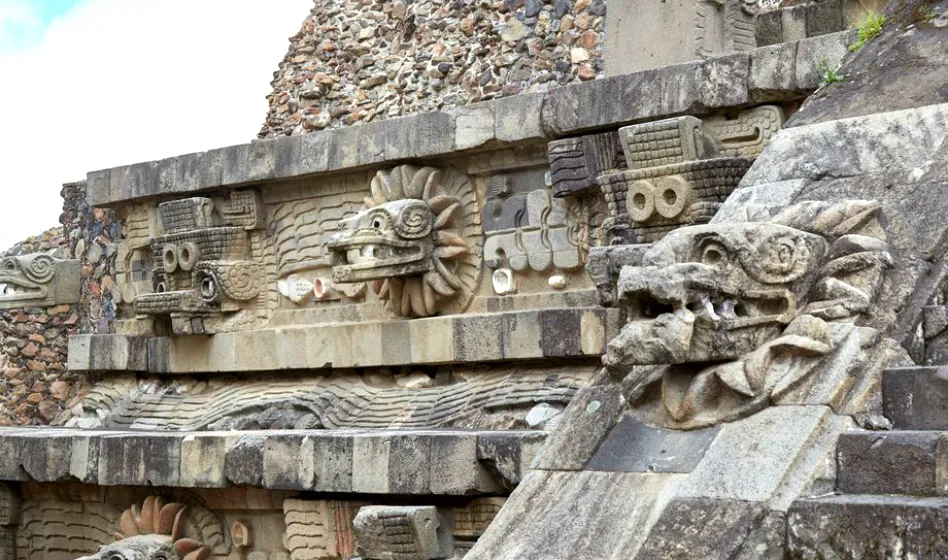
Understanding the Fear of Snakes Here
Throughout Mesoamerican history, snakes have symbolized both reverence and danger. In pre-Hispanic civilizations such as the Maya and Aztec, serpents were powerful spiritual symbols. The feathered serpent Quetzalcóatl represented creation, fertility, and divine knowledge. Maya cosmology connected snakes with rain, fertility, and the underworld. They weren’t feared — they were honored.
With the arrival of Spanish colonization and Catholic teachings, these views shifted. In Judeo-Christian doctrine, the serpent embodies temptation and evil — associations that deeply influenced colonial attitudes. Combined with practical concerns about venomous species, these imported religious ideas transformed the snake into a creature to be killed on sight. This legacy of fear and moral suspicion continues in many rural and urban parts of Mexico, Puerto Aventuras included.
Unfortunately, this fear is often misplaced. Many of the snakes most frequently encountered in and around Puerto Aventuras are entirely harmless.
Why Snakes Are Crucial to Our Ecosystem
Snakes play a vital role in the delicate ecological balance here in Puerto Aventuras. They help regulate populations of rodents, insects, lizards, and even other snakes. Without snakes, pest populations would explode, potentially damaging crops and residential and commercial property while increasing the spread of disease.
They’re also food for larger predators like hawks and coatis, creating an important link in the food chain. And yet, many non-venomous snakes are killed out of pure fear or confusion. I can’t tell you how many times I’ve had to stop a gardener from going after a harmless boa or rat snake with a machete.
When it comes to snakes in Puerto Aventuras and the wider Riviera Maya, knowledge is the best antidote to fear. Education is key. Knowing which snakes are dangerous — and which aren’t — can help alleviate fear and prevent unnecessary harm to both wildlife and people.
Snakes in Puerto Aventuras and the Riviera Maya, By the Numbers
According to biologist Jerico Meléndez Cumí, there are 58 recorded snake species on the Yucatán Peninsula, and of those, only five are considered of medical importance. That tracks with what Quintana Roo’s own health authorities report: of the snakebite cases logged in the state, the large majority come from non-venomous species, and venomous bites remain a small minority even as sightings in developed areas have become more common as the region grows.
The five species of medical importance found in Quintana Roo — which covers Puerto Aventuras and the rest of the Riviera Maya — are the coral snake, the Yucatecan rattlesnake, the Yucatecan cantil, the nauyaca real (fer-de-lance), and the Yucatecan hog-nosed pitviper. That’s the same handful of species you’ll see listed below — and it lines up with what’s actually been documented right here: coral snakes, fer-de-lance, boa constrictors, vine snakes, and milk snakes have all been confirmed in and around Puerto Aventuras itself, not just the wider region (see Wild Animals in Puerto Aventuras). Everything else you’re likely to run into here is harmless.
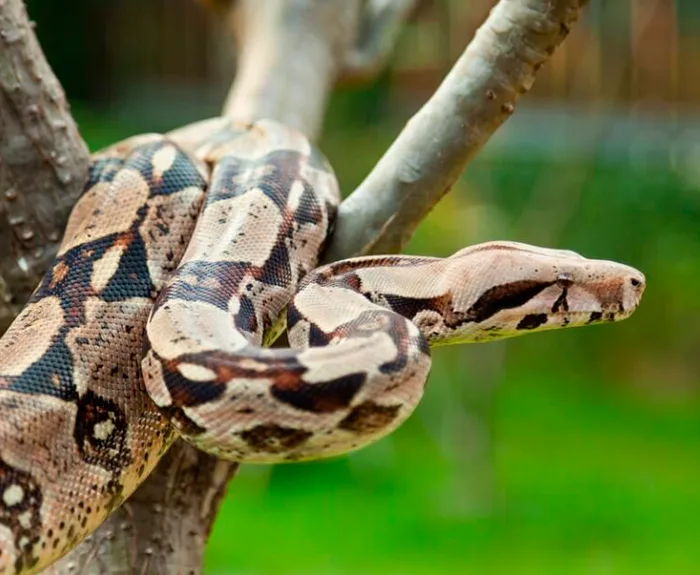
Common Non-Venomous Snakes You’ll See Around Puerto Aventuras
These snakes are harmless to humans and beneficial to the environment:
| Snake | Scientific name | What to know |
|---|---|---|
| Boa Imperator | Boa imperator | Large but gentle and slow-moving; an important rodent predator. Found in forests, mangroves, and residential areas, and frequently seen on golf courses — indifferent to human presence. |
| Mexican Parrot Snake | Leptophis mexicanus | Thin and green with large eyes; feeds on small reptiles, amphibians, and birds’ eggs. Mildly venomous (rear-fanged) but harmless to humans. |
| Yucatan Rat Snake | Pseudelaphe phaescens | Fast-moving and curious; feeds on rodents and birds. Completely non-aggressive, and a protected species in Mexico. |
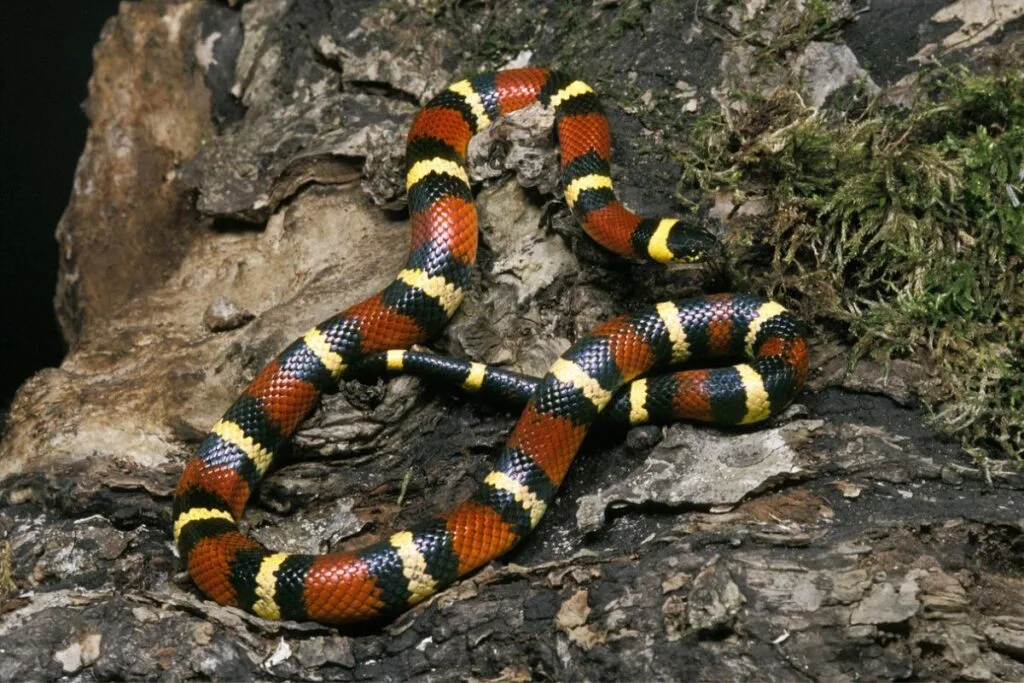
| Tropical Milk Snake | Lampropeltis triangulum annulata | Brightly colored in red, black, and yellow or white. Often confused with the coral snake but completely harmless. |
| Indigo Snake | Drymarchon melanurus | One of the largest snakes in the region; known to eat venomous snakes. Active during the day and poses no danger to humans. |
| Brown Vine Snake | Oxybelis aeneus | Slender, vine-like, with a pointed snout. Mildly venomous (rear-fanged) but harmless to humans; hunts small lizards, frogs, rodents, and birds, and is often overlooked thanks to its camouflage. |
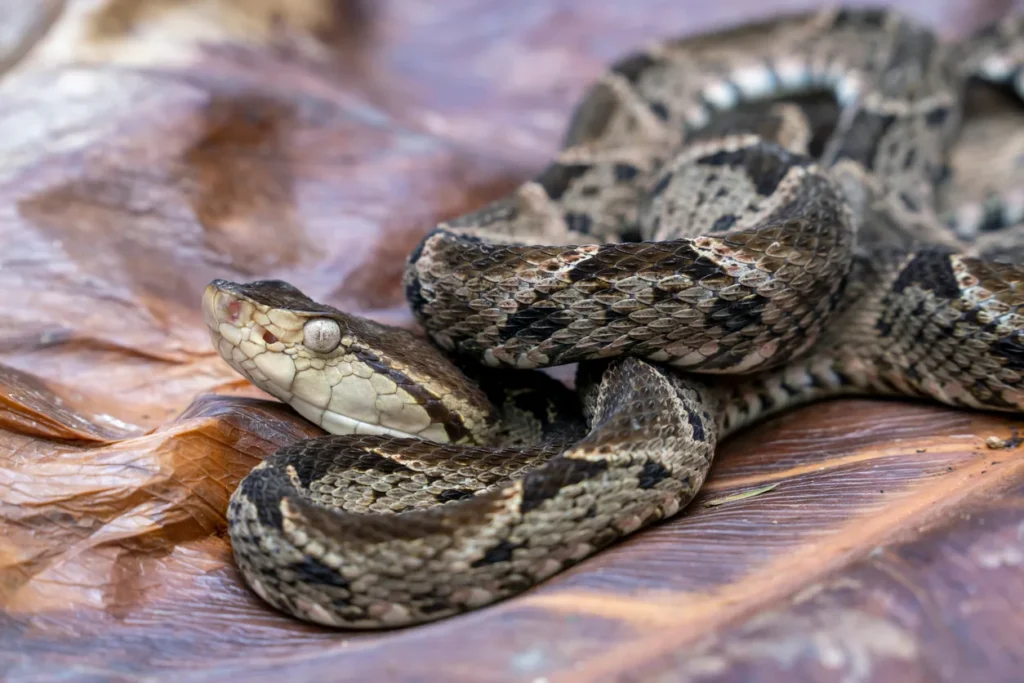
Venomous Snakes to Know in the Riviera Maya
While most snakes around Puerto Aventuras are not venomous, these are the five species Quintana Roo health authorities flag as medically significant:
| Snake | Scientific name | What to know |
|---|---|---|
| Coral Snake | Micrurus diastema | Small and brightly colored in red, yellow, and black. Venomous but shy and rarely aggressive — bites are extremely rare. |
| Nauyaca Real / Fer-de-Lance / Barba Amarilla | Bothrops asper | Highly venomous and potentially aggressive if threatened. Usually found in forested or rural areas; the leading cause of serious snakebites in the region. |
| Yucatecan Rattlesnake | Crotalus tzabcan | Recognizable by its rattle and triangular head. Will warn before striking and tends to avoid populated areas — rarely seen. |
| Yucatecan Cantil | Agkistrodon russeolus | A pit viper related to the Water Moccasin and Cottonmouth. Generally shy and prefers to flee from danger, but will strike if threatened. |
| Yucatecan Hog-Nosed Pitviper / Cuatro Narices | Porthidium yucatanicum | Easily recognizable by its distinctive upturned nose. Highly venomous but not aggressive, and prefers to avoid contact with humans. |
If you’re bitten, or think you’ve been bitten, by any of these, treat it as a medical emergency. Don’t wait to see what happens, and don’t try to catch or kill the snake to identify it. Get to a doctor or hospital right away.
How to Tell the Difference
Not every snake you find should be killed, and it would do the Puerto Aventuras environment a world of good if we all learned to tell the venomous apart from the harmless. If you’re unsure whether a snake is venomous, here are some quick tips:
- Color patterns: Coral snakes have red bands touching yellow; harmless milk snakes have red bands touching black. When in doubt, remember: “Red on yellow will kill a fellow. Red on black is a friend of Jack.” A local biologist has confirmed this rule specifically holds true for coral snakes on the Yucatán Peninsula. It isn’t reliable everywhere in the world, but it works here.
- Head shape: Venomous snakes often (but not always) have a triangular head. Non-venomous snakes typically have rounded heads.
- Pupil shape: Venomous species often have vertical slit pupils. Harmless snakes usually have round pupils.
- Behavior: Most non-venomous snakes will flee if given the chance. Venomous snakes may coil, rattle, or stand their ground if cornered.
Still unsure? It’s better to be safe than sorry. Keep your distance, take a photo, and contact a local wildlife expert.
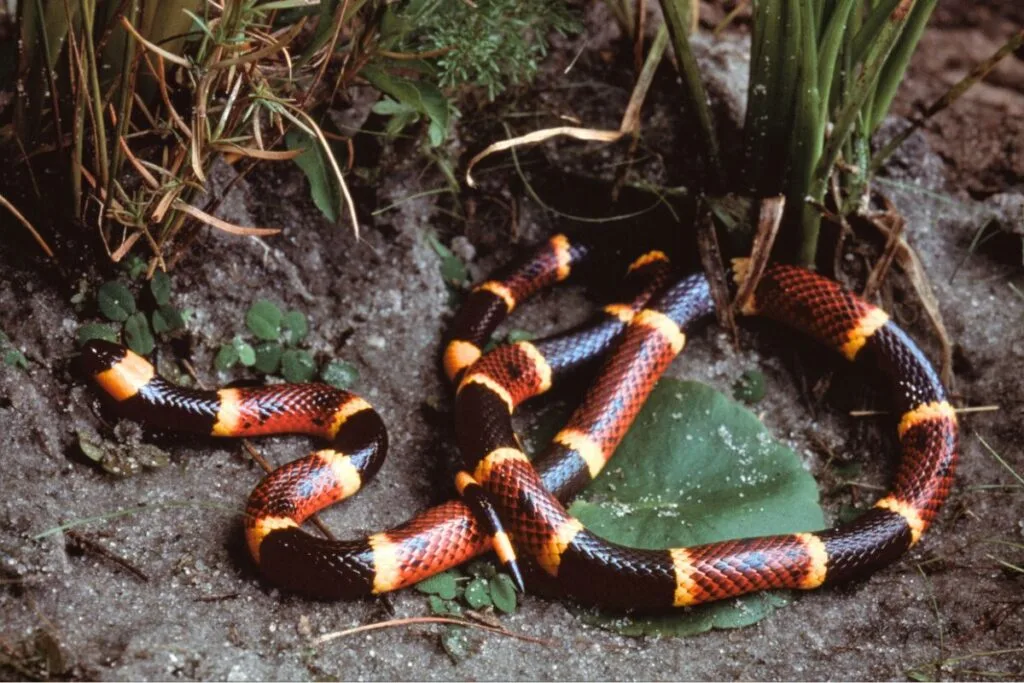
Friendly and Harmless Look-Alikes
A tricky feature of dealing with venomous snakes in Puerto Aventuras is that several perfectly harmless, gentle species look very much like a venomous species. This is especially the case with coral snakes. Because of their coloration, the harmless redback coffee snake, the tropical milk snake, and the unfortunately named snail sucker all look similar to venomous coral snakes. Some of these are quite common and are likely to be seen during the day.
The vast majority of snakes killed in error around here are false coral or milk snakes mistaken for coral snakes, and rat snakes mistaken for venomous species like the fer-de-lance or the Yucatecan cantil. Unfortunately, the school of thought amongst most gardeners seems to be: “When in doubt, get the machete out.”
Why Killing Snakes Hurts Us All
Killing snakes disrupts the ecological balance. It removes natural pest control, breaks food chains, and can even increase encounters with more dangerous species. Some venomous snakes prey on non-venomous ones, and eliminating the harmless snakes can leave a void that gets filled by more aggressive predators.
Many native snake species in Mexico are actually protected under environmental laws. Killing them may not just be unnecessary, it may also be illegal.
The best thing you can do when encountering a snake in Puerto Aventuras? Give it space. Most snakes are not aggressive and will leave if left alone. Teach children (and household staff) to identify local species and understand their role in nature. If a snake is inside your home or in a location where it poses a danger, call a local relocation expert rather than killing it.
What to Do If You See a Snake in Puerto Aventuras
Conservation groups across the Yucatán Peninsula are working to re-educate the public and protect local snake species, and Puerto Aventuras has its own: Fundación Eco-Bahía has run “Meet the Snakes: From Fear to Respect” workshops for local students, partnering with the Ángeles Mastretta Library right here in the Puerto Aventuras poblado and the Hekab Be Educational Center in Akumal.
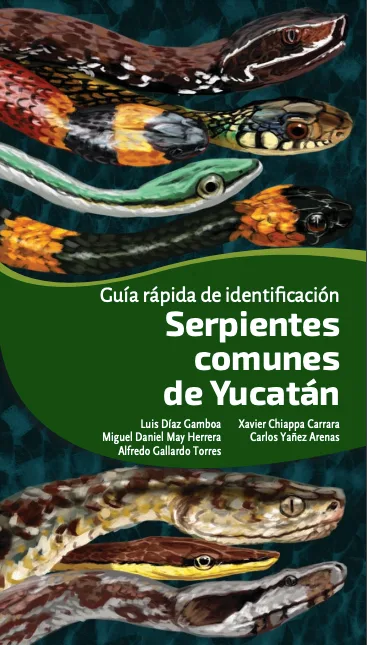
For an excellent resource covering the snakes of the Yucatan, click on the image below for a downloadable field guide. This PDF includes many of the venomous, mildly venomous, and non-venomous varieties that exist here in a very easy-to-read format, perfect to print and give to your household staff or visiting guests who may be curious or concerned.
Final Thoughts
Snakes in Puerto Aventuras and the Riviera Maya really don’t deserve their bad reputation. In fact, they’re among the most misunderstood animals in Mexico. For centuries, they were revered as symbols of wisdom and rebirth. I know not everyone agrees, but I think they are beautiful and worthy creatures in their own right.
Snakes play an important part in maintaining the balance of species in our local ecosystem, especially with regard to controlling rodent populations, and today’s science backs up what ancient cultures already knew: snakes are vital, not vile.
So next time you spot one slithering across the sidewalk or resting near your garden here in Puerto Aventuras, take a breath, don’t panic, and appreciate the role it plays in the natural world.